Specifications and Dimensions of HDPE Pipes for Engineering Projects
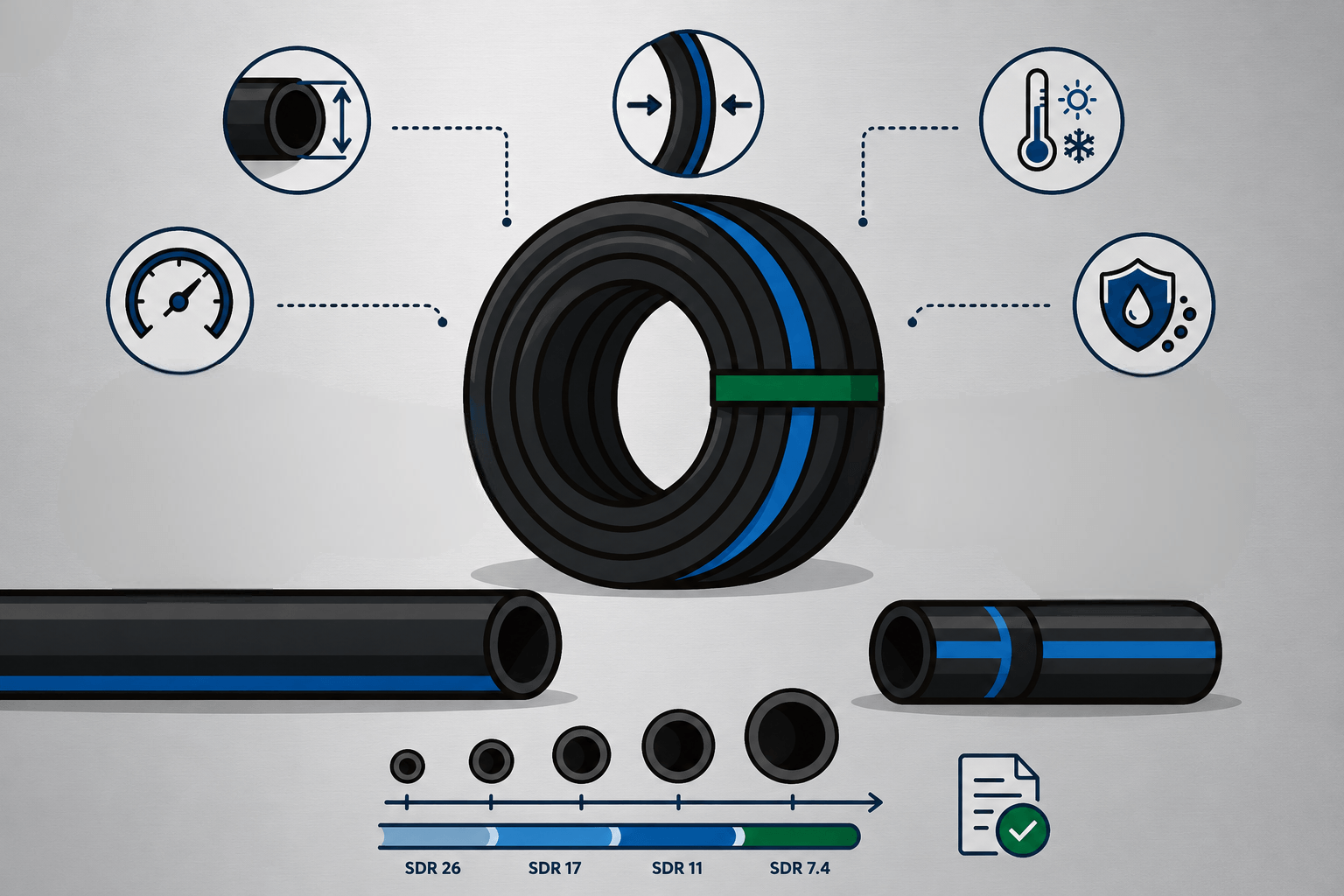
HDPE pipes (High-Density Polyethylene pipes) are among the most widely used solutions in modern infrastructure projects due to their high resistance to pressure and corrosion, easy installation, and long service life.
However, the success of any project depends mainly on selecting the right HDPE pipes according to the application, operating pressure, and network type. Understanding the essential HDPE pipe specifications helps engineers and contractors implement more efficient and reliable networks.
What Are HDPE Pipes?
HDPE pipes are pipes manufactured from High-Density Polyethylene, an engineering plastic material known for its high flexibility and excellent resistance to external conditions.
These pipes are used in many applications, including:
- Drinking water networks
- Modern irrigation networks
- Sewage networks
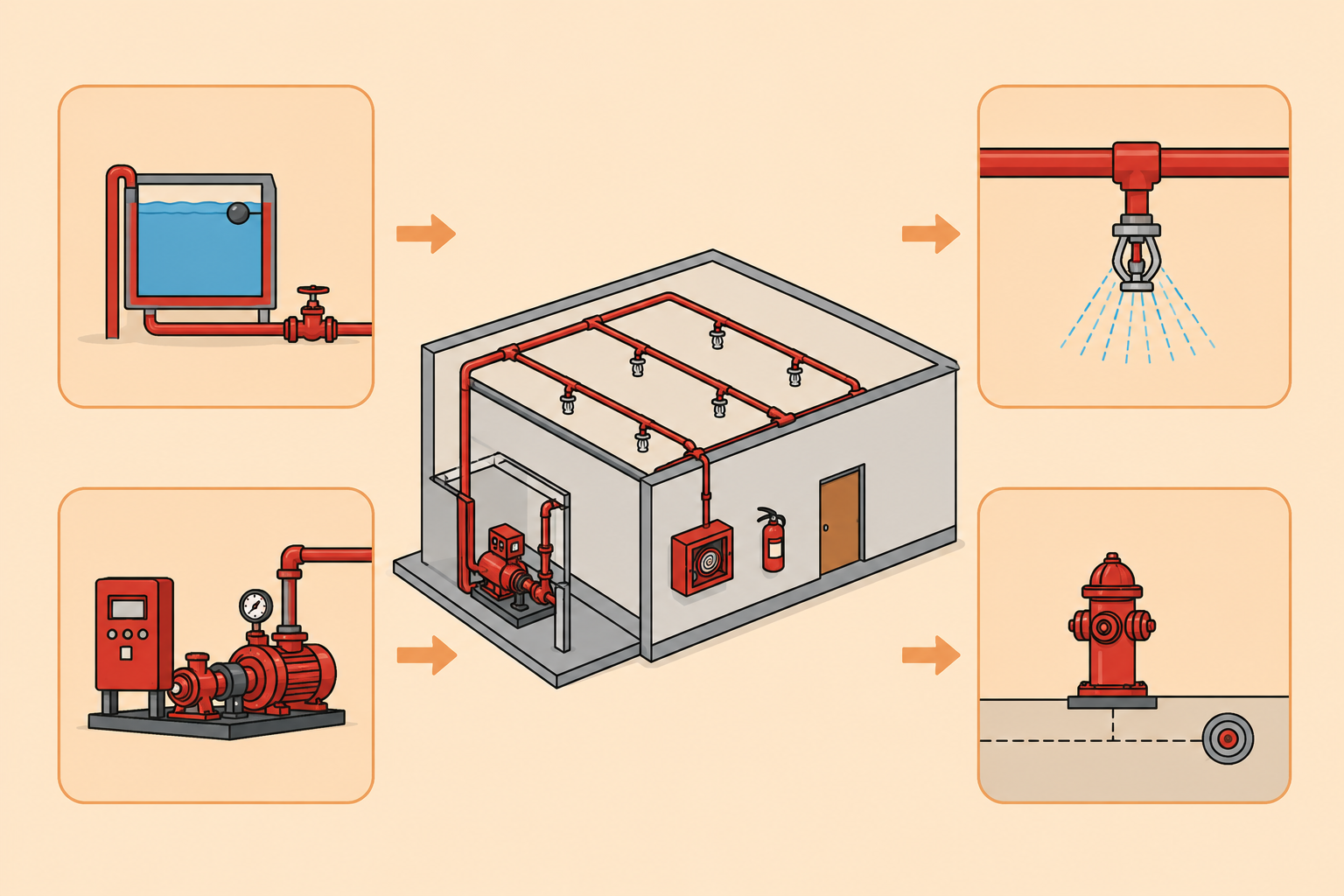
- Fire protection networks
- Industrial fluid transportation lines
- Infrastructure projects
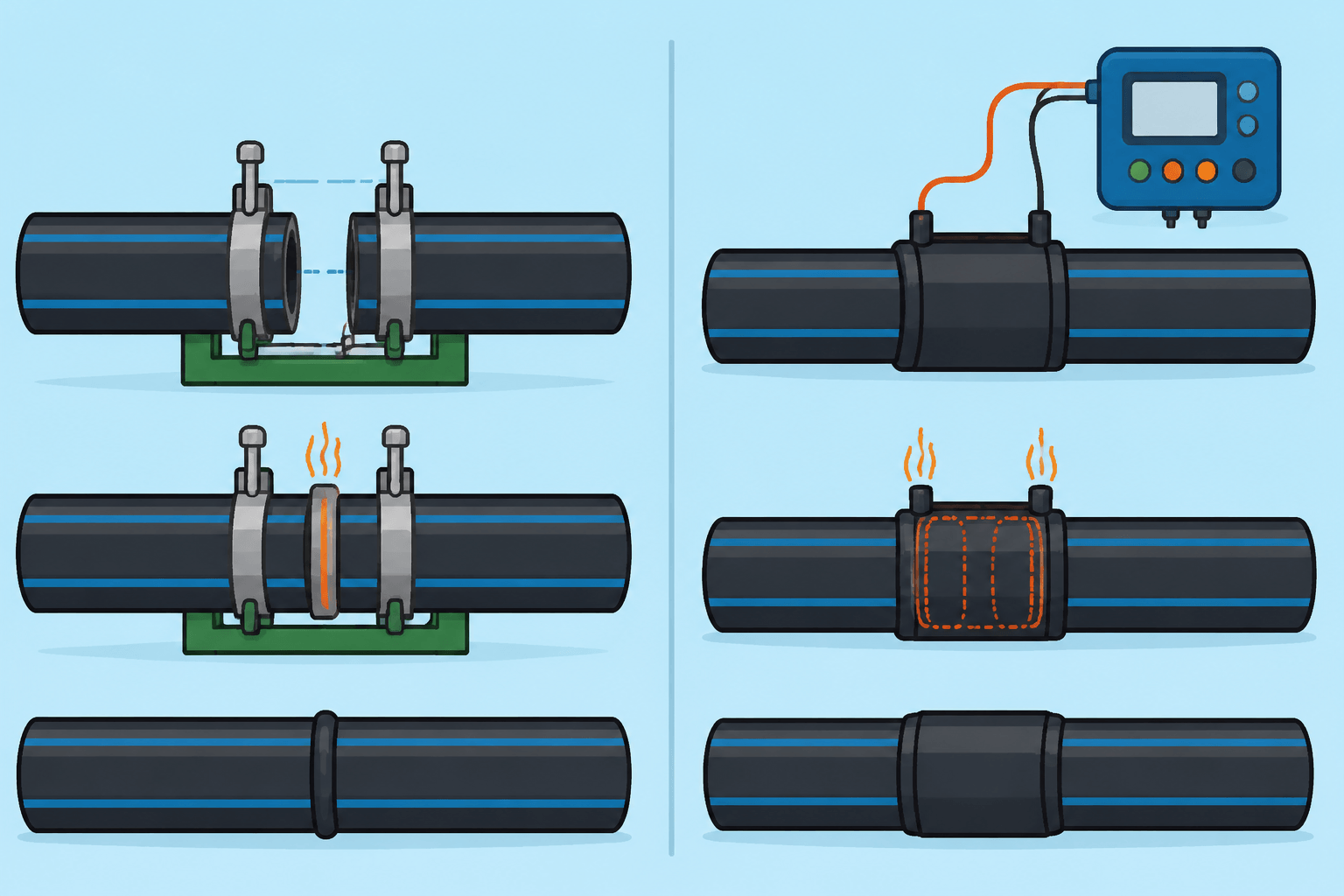
HDPE pipes can be connected using thermal welding techniques such as:
- Butt Fusion
- Electro Fusion
which create strong joints and reduce the possibility of leakage.
Important HDPE Pipe Specifications to Consider Before Selection
When choosing HDPE pipes for any project, several technical factors must be reviewed.
1. Pipe Pressure Rating (PN Rating)
Pressure rating is one of the most important HDPE pipe specifications.
The pipe’s ability to withstand pressure is determined according to PN classifications, such as:
- PN6
- PN10
- PN16
- PN20
The suitable pressure rating is selected based on:
- Operating pressure inside the network
- Type of transported fluid
- Future operating conditions
Choosing a pipe with a lower pressure rating than required may cause problems such as:
- Leakage
- Network failure
- Reduced operating efficiency
2. SDR Ratio in HDPE Pipes
SDR is one of the most important terms when selecting HDPE pipes.
It represents the relationship between:
- External pipe diameter
- Pipe wall thickness
The lower the SDR number:
- The thicker the pipe wall
- The higher the pressure resistance
Therefore, SDR selection depends on project requirements, not only pipe diameter.
3. Suitable HDPE Pipe Dimensions for Projects
HDPE pipes are available in different diameters to suit various applications.
Common HDPE pipe sizes include:
- 20 mm
- 25 mm
- 32 mm
- 50 mm
- 63 mm
- 90 mm
- 110 mm
- 160 mm
- 225 mm
- 315 mm
- 400 mm and above
The correct diameter selection depends on:
- Required flow rate
- Network length
- Pressure loss
- Project requirements
For example:
Small irrigation networks may require smaller diameters, while main water transmission lines require larger diameters.
4. Raw Material Type
The quality of the raw material directly affects pipe performance.
HDPE pipes are commonly manufactured from materials such as:
- PE100
- PE80
PE100 is one of the most widely used materials in modern projects due to:
- High pressure resistance
- Long-term efficiency
- Better performance in large-scale networks
5. Standards and Certifications
Before purchasing HDPE pipes, ensure they comply with the required project standards, such as:
- ISO
- DIN
- EN
This ensures:
- Manufacturing quality
- Dimensional accuracy
- Resistance to operating conditions
How to Choose HDPE Pipes According to Project Type?
Drinking Water Networks
Consider:
- Material approval for drinking water applications
- Network pressure requirements
- Joint quality
Irrigation Networks
Focus on:
- Pipe flexibility
- Resistance to environmental conditions
- Suitable diameter selection for water distribution
Sewage Networks
Pipe selection depends on:
- Flow rate
- Chemical resistance
- Soil conditions
Fire Protection Networks
Fire networks require:
- High pressure resistance
- Accurate design
- Suitable pipes according to fire system requirements
Common Mistakes When Selecting HDPE Pipes
Choosing Diameter Based Only on Price
Selecting a smaller diameter to reduce costs may lead to:
- Low flow performance
- Increased pressure loss
Ignoring Welding Method
The selected pipe type must be compatible with the required joining method.
Not Considering Site Conditions
Important factors include:
- Soil type
- Temperature changes
- External loads
Why Are HDPE Pipes an Ideal Choice for Engineering Projects?
HDPE pipes provide many advantages, including:
- Corrosion and rust resistance
- Long service life
- Lightweight and easy transportation
- High flexibility
- Reduced maintenance requirements
- Efficient fluid transportation
How Can United Engineers Help You Choose the Right HDPE Pipes for Your Project?
Selecting the right HDPE pipes is a key step to ensure the efficiency and reliability of any pipeline project. The success of the entire system depends on choosing the correct diameter, wall thickness, pressure rating, and connection method.
Therefore, selecting pipes is not only about purchasing materials, but requires a complete technical study based on project requirements, operating conditions, and network type.
United Engineers provides integrated solutions for infrastructure projects, starting from selecting the appropriate HDPE pipe specifications to supplying the necessary equipment and products for high-quality network implementation.
Our solutions include:
- Drinking water network implementation using polyethylene pipes
- Design and installation of modern irrigation networks
- Fire network implementation using suitable engineering materials
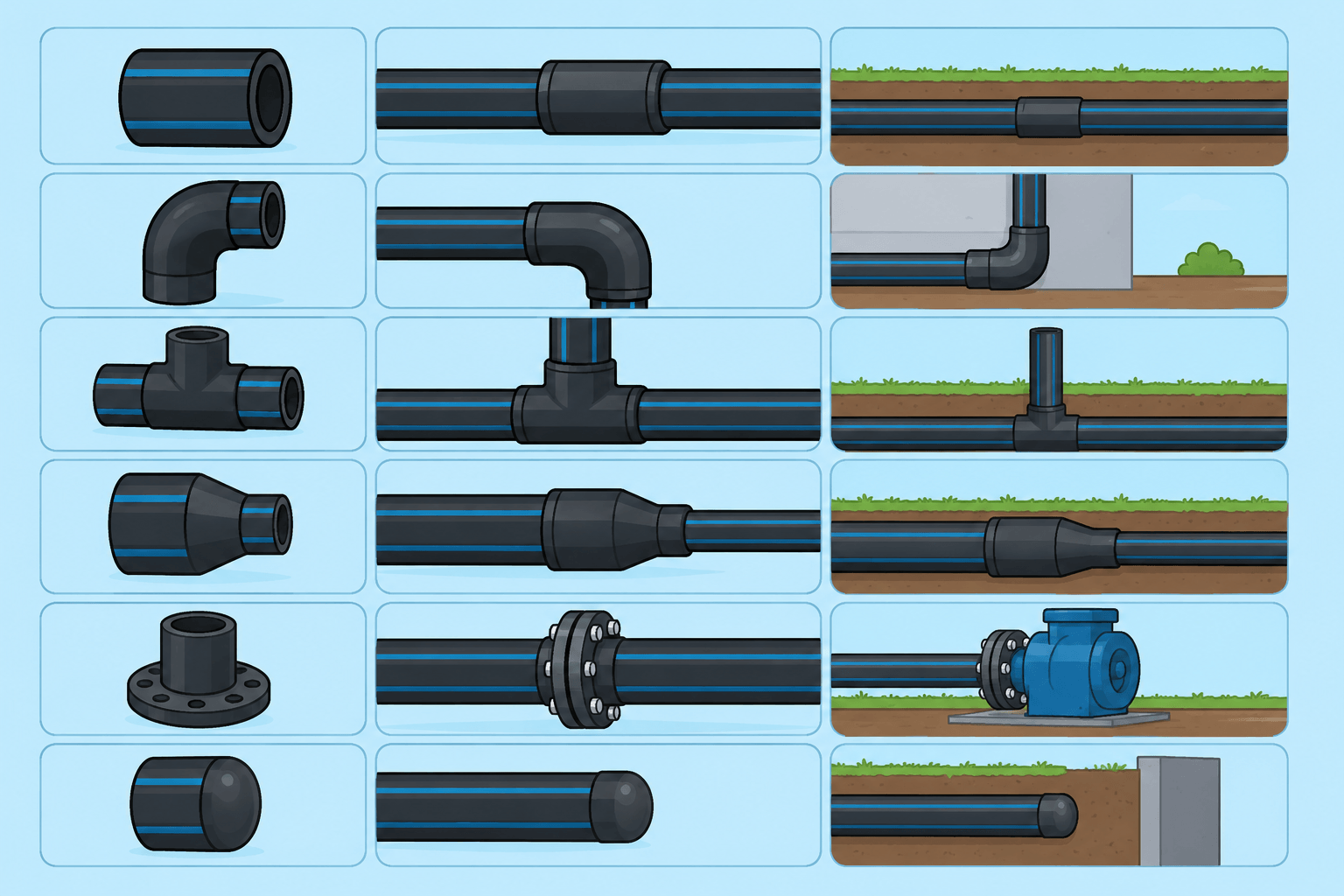
- HDPE fittings supply
- Providing polyethylene pipe welding machines and equipment
You can explore our related services:
Drinking Water Networks: Complete solutions for water pipeline implementation using HDPE pipes.
Irrigation Water Networks: Choosing the best pipe systems suitable for modern irrigation networks.
Fire Networks: Implementing fire protection systems using high-quality pipes and suitable specifications.
Get a Technical Consultation for Choosing the Right HDPE Pipes
Choosing the correct pipes helps reduce operating problems, improve network efficiency, and lower future maintenance costs.
If you need assistance with:
- Suitable HDPE pipe dimensions
- Required operating pressure
- Connection methods
- Best welding technique
- Project technical specifications
The United Engineers team is ready to provide technical support and suitable solutions based on your project requirements.
We provide integrated solutions including HDPE pipes, fittings, welding machines, and technical support to ensure strong and efficient pipeline networks.
Contact us today to receive a technical consultation and a customized quotation for your project.