Butt Fusion vs. Electro Fusion: Which HDPE Pipe Welding Method Is Better?
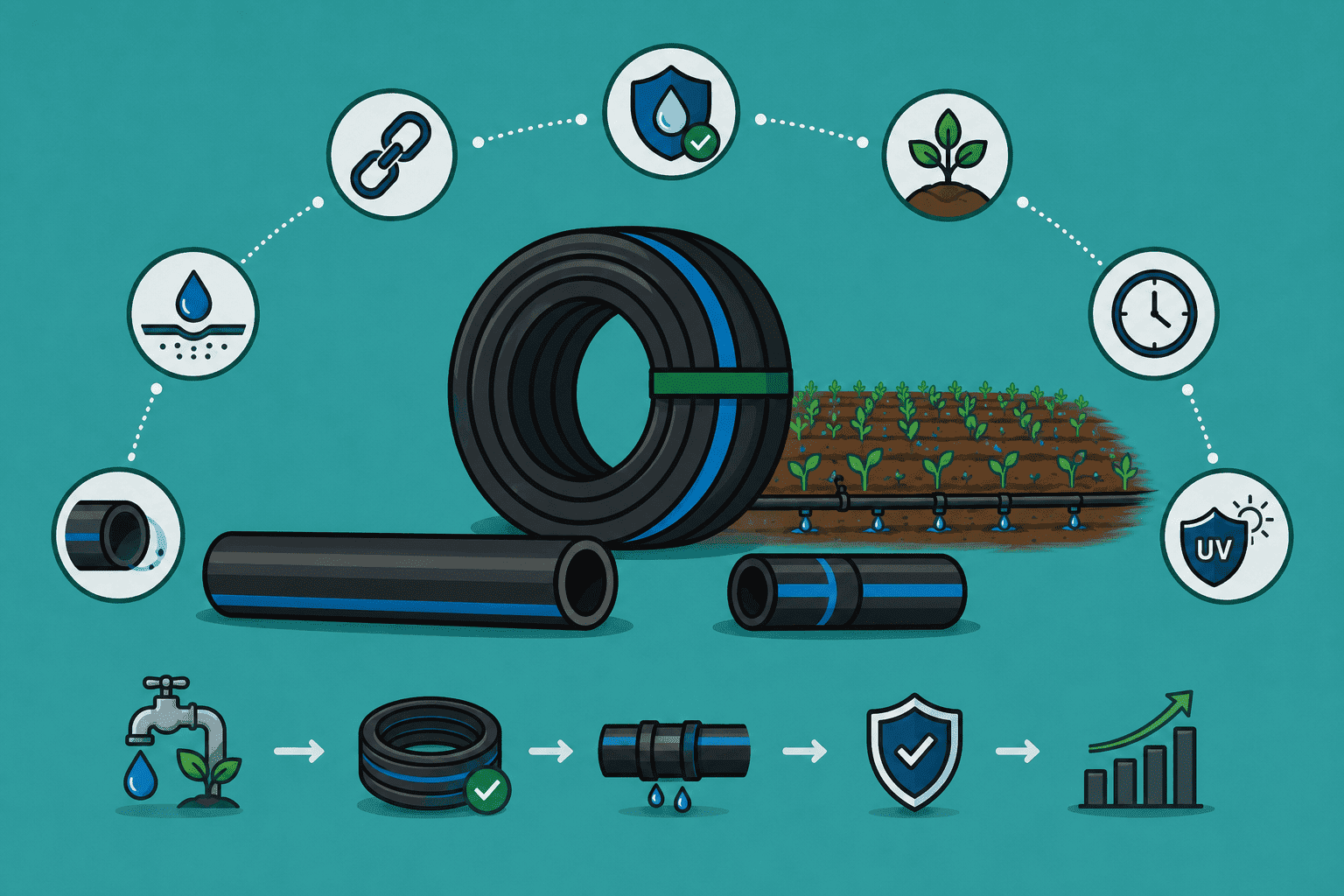
HDPE (High-Density Polyethylene) pipes are among the most widely used piping systems in infrastructure projects, including drinking water networks, irrigation systems, sewage networks, fire protection systems, and industrial fluid transportation. Their durability, corrosion resistance, and long service life make them the preferred choice for modern engineering projects.
However, the reliability of an HDPE pipeline depends not only on the quality of the pipes themselves but also on the welding method used to join them. The two most common welding techniques are Butt Fusion and Electro Fusion, each offering unique advantages depending on the application and project requirements.
In this guide, we’ll explain the differences between Butt Fusion and Electro Fusion, their advantages, typical applications, and how to determine the best option for your project.
What Is Butt Fusion Welding?
Butt Fusion is the most commonly used welding method for HDPE pipes in large infrastructure projects.
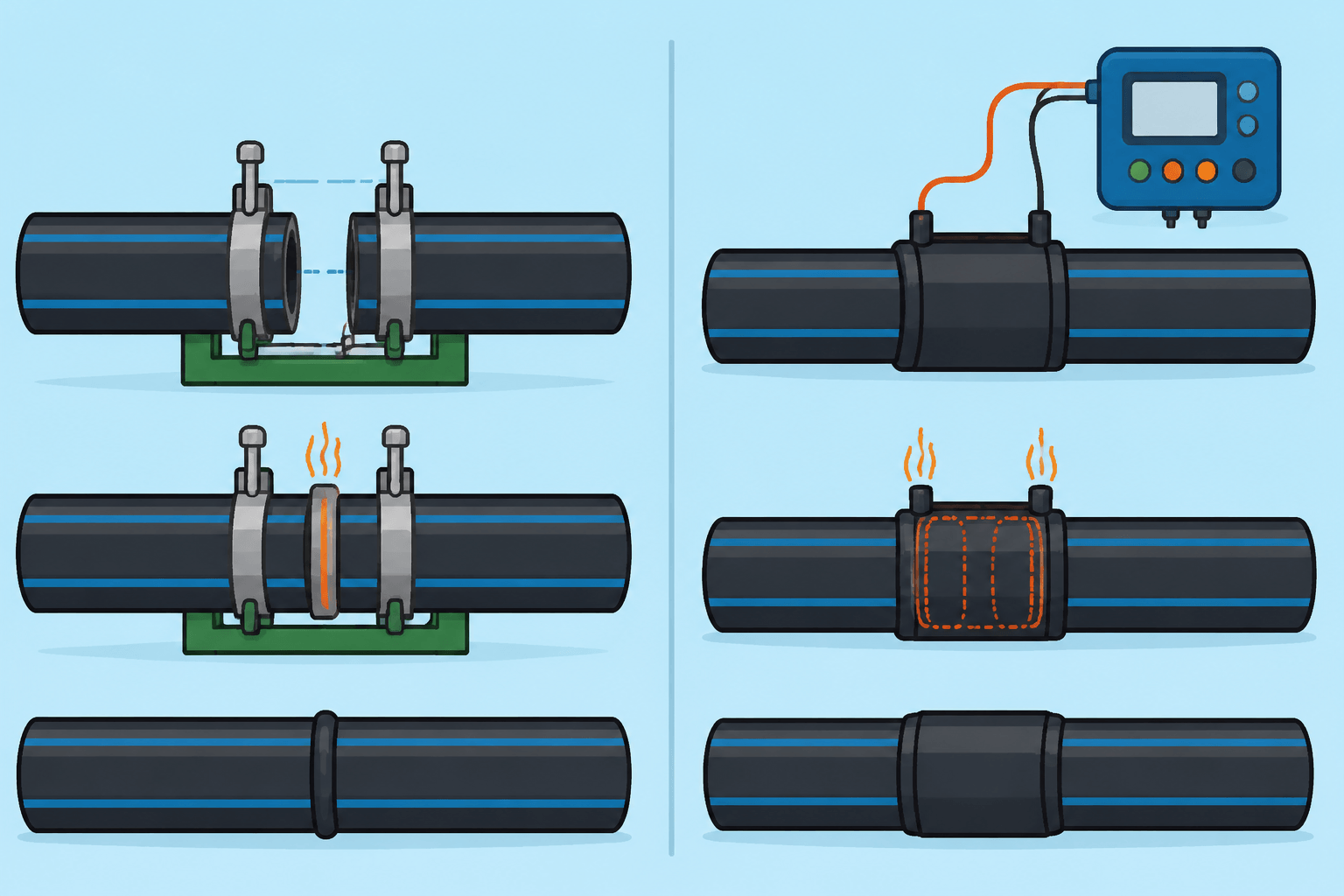
This process involves heating the ends of two HDPE pipes using a heating plate until the material reaches the proper melting temperature. The heated pipe ends are then pressed together using a Butt Fusion Welding Machine, creating a homogeneous joint that is often as strong as—or even stronger than—the pipe itself.
One of the key advantages of Butt Fusion is that it joins the pipes directly without requiring additional fittings.
Advantages of Butt Fusion Welding
Butt Fusion offers several important benefits:
- Produces joints with strength equal to or greater than the pipe itself.
- Does not require additional fittings.
- Ideal for medium and large pipe diameters.
- Lower operating costs in large-scale projects.
- Excellent leak resistance.
- Long service life and reliable performance.
Because of these advantages, Butt Fusion is widely used in:
- Drinking water networks
- Irrigation systems
- Sewage networks
- Industrial pipeline systems
- Infrastructure projects
What Is Electro Fusion Welding?
Electro Fusion is a welding method that uses special fittings with built-in electrical heating coils.
After inserting the pipe ends into the fitting, an Electro Fusion Welding Machine supplies an electric current to the embedded coils. The heat generated melts both the fitting and the pipe surfaces, creating a strong, leak-free joint.
This method is particularly effective in confined spaces or locations where Butt Fusion equipment cannot be easily used.
Advantages of Electro Fusion Welding
Electro Fusion provides several advantages, including:
- Ideal for confined or restricted workspaces.
- Excellent for maintenance and repair projects.
- Suitable where pipe movement is limited.
- Produces high-quality, reliable joints when installed correctly.
- Recommended for small and medium pipe diameters.
- Reduces the need to move or reposition existing pipelines.
Butt Fusion vs. Electro Fusion: What’s the Difference?
Although both methods create strong and durable joints, they differ in several key aspects.
| Feature | Butt Fusion | Electro Fusion |
| Welding Method | Direct pipe-to-pipe welding | Welding using an electrofusion fitting |
| Additional Fittings | Not required | Required |
| Typical Applications | New pipeline installations | Repairs, maintenance, confined spaces |
| Suitable Pipe Sizes | Medium to large diameters | Small to medium diameters |
| Installation Speed | Faster for large projects | Faster for repairs and modifications |
| Material Cost | Lower | Higher due to electrofusion fittings |
| Space Requirement | Requires adequate working space | Suitable for restricted spaces |
When Should You Use Butt Fusion?
Butt Fusion is the preferred choice when:
- Constructing a new pipeline network.
- Working with large-diameter HDPE pipes.
- Sufficient workspace is available.
- Reducing fitting costs is a priority.
- The project involves a large number of welds.
For these reasons, Butt Fusion is the preferred method for most large-scale infrastructure projects.
When Should You Use Electro Fusion?
Electro Fusion is recommended for:
- Maintenance and repair work.
- Connecting new pipelines to existing networks.
- Confined or difficult-to-access locations.
- Projects where moving the pipes is not possible.
- Urban utility installations requiring precision.
It is commonly used in municipal water networks, industrial facilities, and utility upgrades.
Which Welding Method Is Best for Your Project?
There is no single welding method that is best for every application. The right choice depends on the specific project requirements.
If you’re installing a new pipeline system with large-diameter HDPE pipes, Butt Fusion is generally the most efficient and cost-effective solution.
If your project involves repairs, modifications, or installations in confined spaces, Electro Fusion offers greater flexibility and easier installation.
Professional engineering teams evaluate project conditions, pipe sizes, and site constraints before selecting the most suitable welding method.
Why High-Quality Welding Equipment Matters
Regardless of the welding method you choose, the quality of the equipment plays a critical role in the success of the installation.
Using professional HDPE Pipe Welding Machines ensures:
- Accurate temperature control.
- Consistent welding pressure.
- High-quality weld joints.
- Reduced risk of leakage or future failures.
- Longer service life for the pipeline.
Routine maintenance and regular calibration of welding equipment also help maintain optimal performance and ensure compliance with engineering standards.
How United Engineers Can Help You Choose the Right Welding Solution
United Engineers has extensive experience in delivering HDPE pipeline solutions for infrastructure projects, providing complete support from equipment supply to technical consultation and project execution.
Our services include:
- Rental and sale of HDPE Pipe Welding Machines.
- Supply of Butt Fusion and Electro Fusion welding machines from leading international manufacturers.
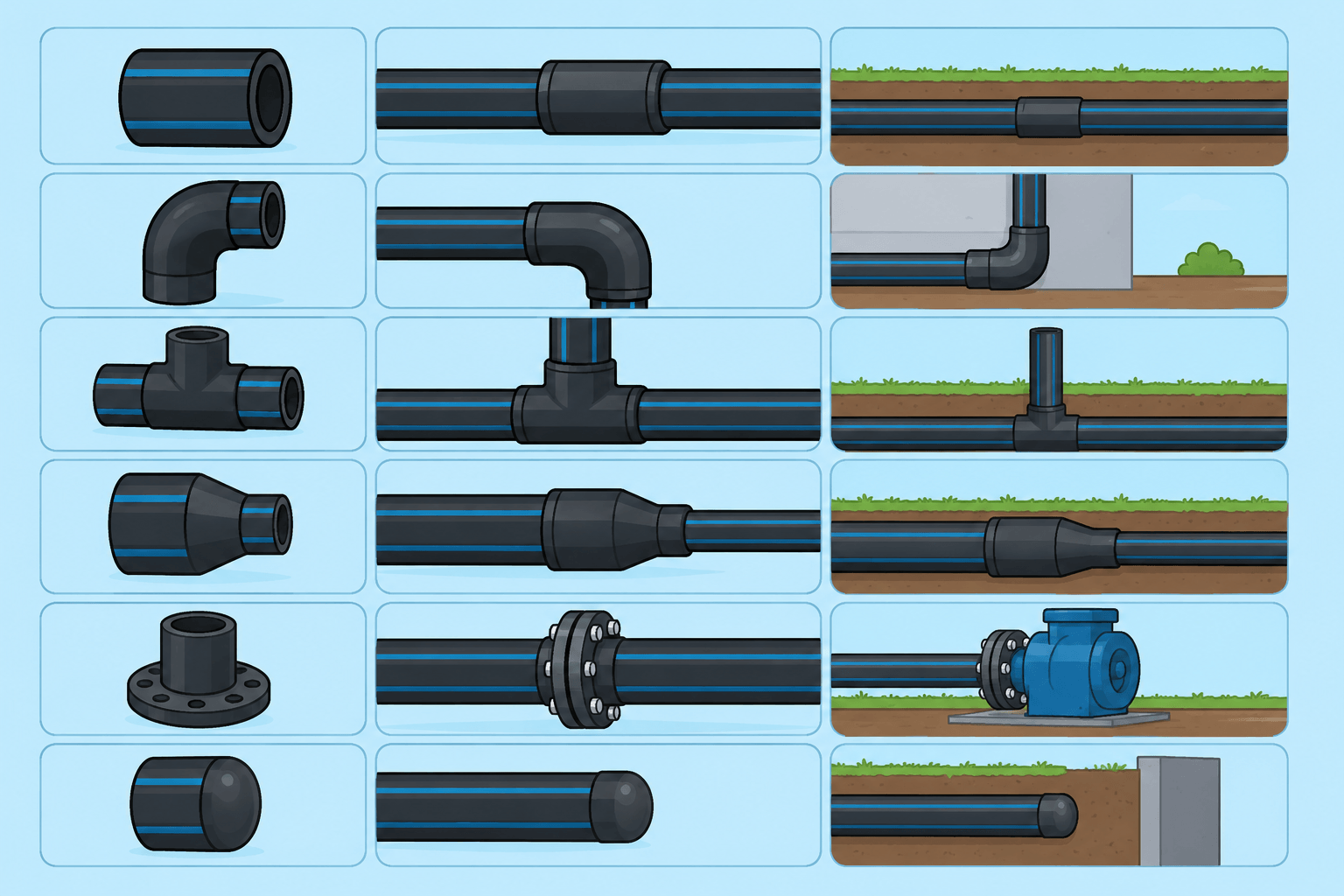
- Manufacturing and supplying HDPE fittings that meet international standards.
- Training engineers and technicians on proper HDPE welding techniques.
- Periodic maintenance and calibration of welding machines to ensure maximum performance.
Get Expert Advice on Choosing the Right HDPE Welding Equipment
Selecting the appropriate welding technique is just as important as choosing the right HDPE pipe. It directly impacts the quality, reliability, and long-term performance of your pipeline network.
Whether you’re looking for a Butt Fusion Welding Machine, an Electro Fusion Welding Machine, or professional guidance on selecting the best welding solution for your project, the team at United Engineers is ready to help.
We provide complete HDPE solutions, including welding machines, HDPE fittings, technical support, training, and engineering consultation to ensure your project is completed efficiently and to the highest quality standards.
Contact United Engineers today for expert advice and a customized quotation for your next HDPE pipeline project.
Request your technical consultation today and get a complete solution for your project.