Fire Protection Network Design, Installation, and Testing: A Complete Guide
Fire protection systems are among the most critical safety systems in residential, commercial, and industrial facilities. They play a vital role in minimizing fire damage while protecting lives and property. The success of any fire protection system depends on the integration of several key elements, beginning with precise engineering design, followed by selecting the appropriate fire protection pipes, fittings, and valves, designing an efficient Fire Pump Room, constructing reliable Underground Fire Networks, and finally performing fire protection network testing before handover to ensure the system is fully operational when needed.
Installing a fire protection network involves much more than simply laying pipes. It requires careful evaluation of project requirements, accurate hydraulic calculations, proper material and equipment selection, and strict compliance with international engineering standards such as NFPA and other applicable codes.
In this guide, we’ll walk through every stage of a fire protection project, from initial design through final testing and commissioning.
What Are Fire Protection Networks?
Fire protection networks are integrated piping systems designed to transport water from the main water supply to firefighting points inside or outside a facility, providing the required flow rate and pressure needed to suppress fires effectively.
These systems are commonly used in:
- Residential buildings
- Commercial complexes
- Industrial facilities and factories
- Hospitals
- Hotels
- Universities and schools
- Warehouses and storage facilities
- Infrastructure projects
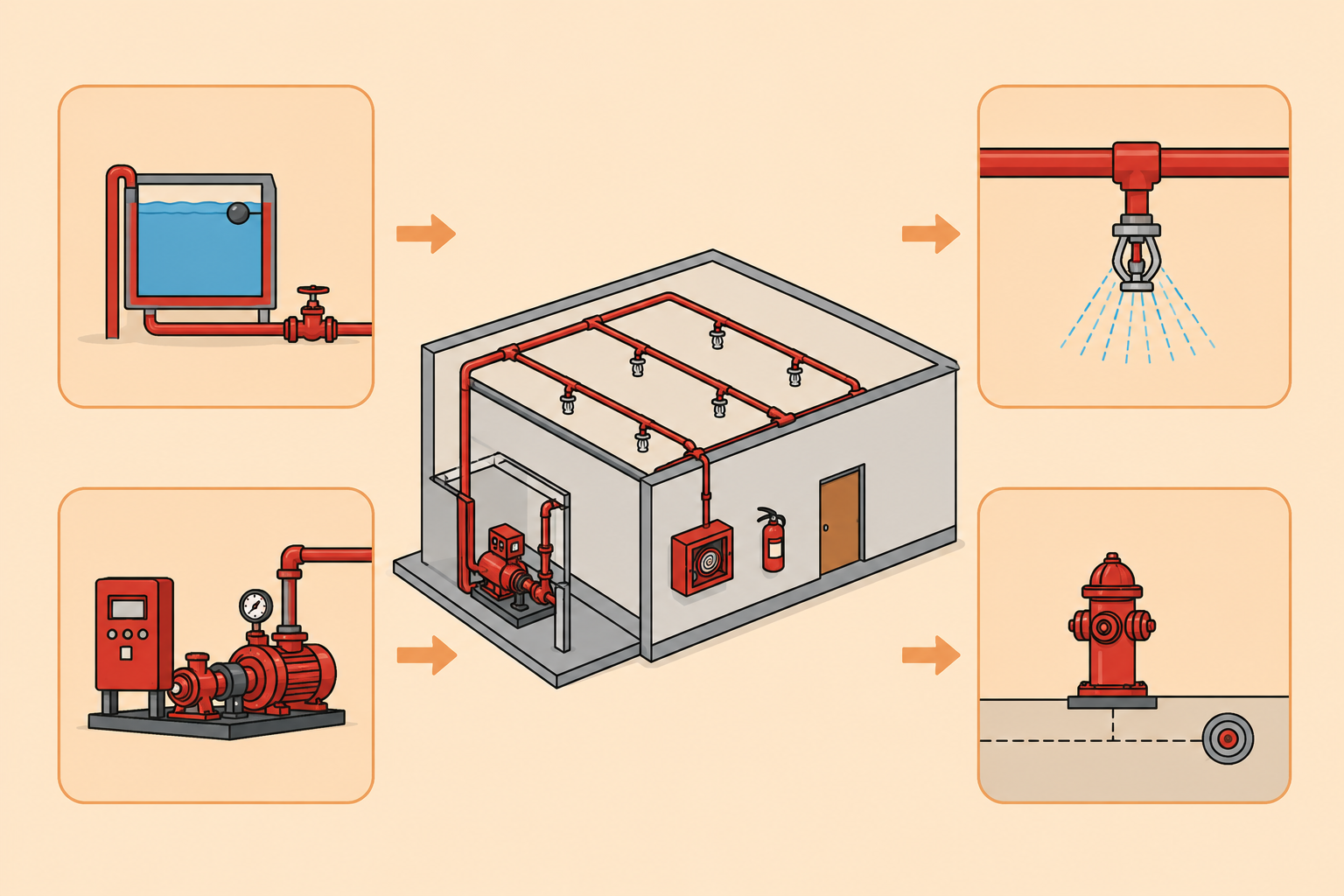
A typical fire protection network consists of several interconnected components, including:
- Main and branch pipelines
- Control valves
- Fire sprinklers
- Fire hose reels and cabinets
- Fire pumps
- Fire Pump Room
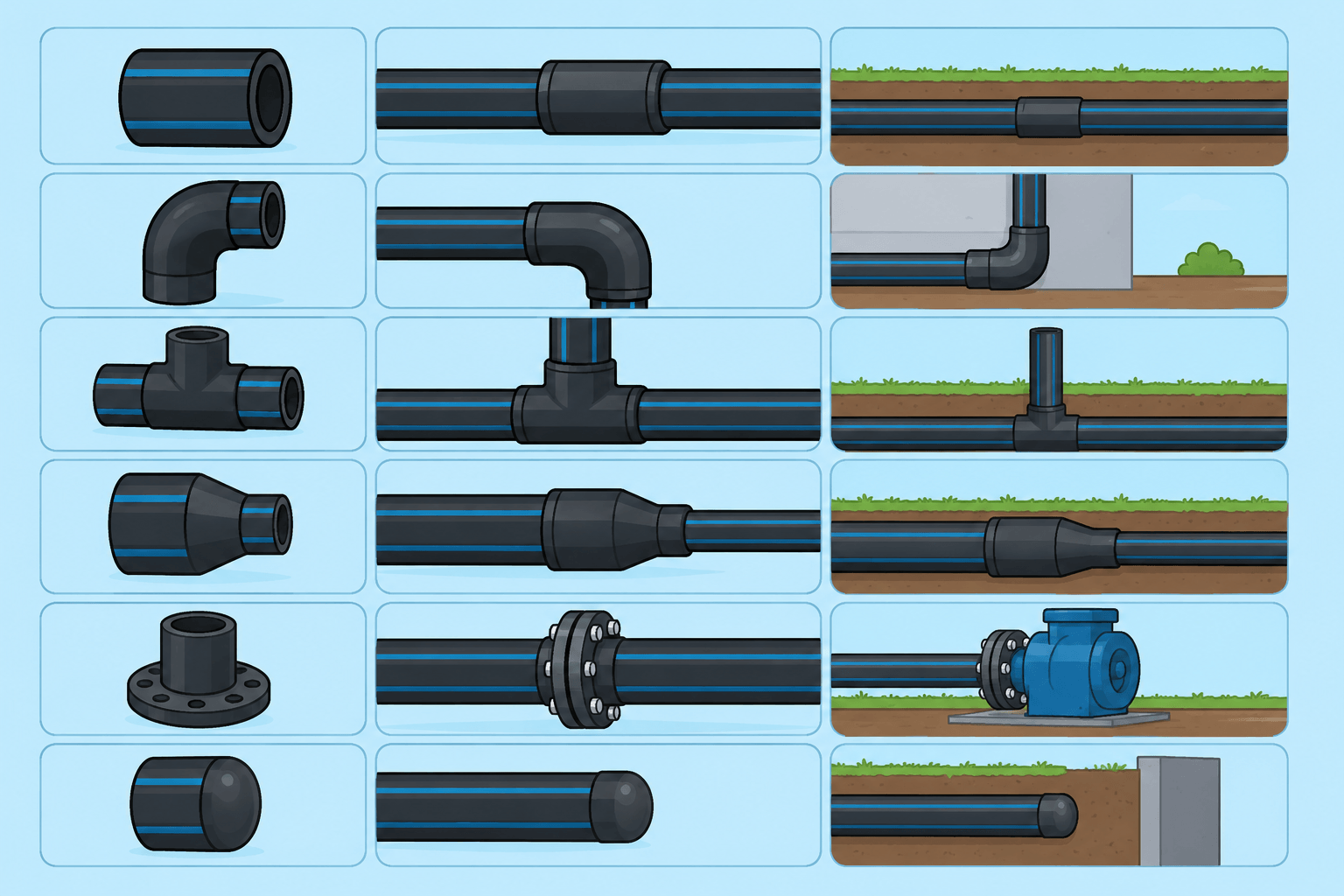
- Pipe fittings and accessories
- Pressure monitoring and control devices
All of these components must work together as one integrated system to ensure that adequate water pressure and flow are available during emergency situations.
Stages of Fire Protection Network Design
Before any fire protection network is installed, a detailed engineering design must be developed based on the facility type, building size, hazard classification, and the number of required fire protection points.
A properly designed system helps:
- Ensure water reaches every part of the building.
- Maintain the required operating pressure at every outlet.
- Minimize pressure loss throughout the network.
- Select the appropriate pipes and equipment.
- Reduce long-term operation and maintenance costs.
- Ensure compliance with applicable engineering codes and standards.
For this reason, specialized engineering companies rely on hydraulic calculation software and internationally recognized design standards to develop highly efficient and reliable fire protection systems.
Fire Protection Network Pressure Calculations
Fire protection network pressure calculations are among the most critical stages in designing any fire protection system. Every point within the network must receive sufficient water flow and operating pressure when the entire system is activated.
Pressure calculations consider several engineering factors, including:
- Pipeline length
- Pipe diameters
- Number of sprinklers or fire hose cabinets
- Elevation differences throughout the project
- Required flow rate
- Pressure losses caused by friction inside pipes and fittings
- Fire pump capacity
These calculations are performed in accordance with NFPA requirements or applicable local engineering codes to ensure the system performs effectively under all operating conditions.
Any error in hydraulic calculations may result in insufficient pressure at critical fire protection points or excessive loading on the fire pumps, directly affecting the overall performance of the fire protection system.
Selecting the Correct Fire Pipe Diameter
Selecting the correct fire protection pipe diameter is one of the most important decisions affecting the overall performance of the system.
Pipe size should never be selected based solely on available space or material cost. Instead, it must be determined according to hydraulic calculation results and project-specific requirements.
Key factors considered when selecting pipe diameter include:
- Required water flow rate
- Water velocity
- Pressure loss
- Number of fire protection outlets
- Building size
- Hazard classification
Choosing a pipe diameter that is too small can reduce water pressure and prevent the system from achieving the required firefighting performance. On the other hand, selecting unnecessarily large pipes increases project costs without providing additional operational benefits.
Choosing the Right Type of Fire Protection Pipes
Several types of pipes are used in fire protection systems, with the selection depending on the installation location, project requirements, and engineering specifications.
The most commonly used pipe materials include:
- HDPE Pipes
- Steel Pipes
- Ductile Iron Pipes
The appropriate pipe type is selected based on factors such as:
- Operating pressure
- Soil conditions
- Installation location
- Corrosion resistance
- Required service life
In many infrastructure projects, HDPE pipes have become the preferred solution for Underground Fire Networks due to their exceptional corrosion resistance, flexibility, and ease of installation using Butt Fusion and Electro Fusion welding technologies. These characteristics significantly reduce the risk of leakage while extending the service life of the entire network.
Fire Protection Valves
Fire protection valves play a critical role in controlling water flow throughout the system while allowing individual sections of the network to be isolated during maintenance or emergency situations.
The most commonly used valves include:
- Gate Valve
- Butterfly Valve
- Check Valve
- Alarm Check Valve
- OS&Y Valve
Valves should be selected according to the system operating pressure, application, and applicable engineering codes to ensure reliable performance and simplified maintenance procedures.
Additionally, all valves should remain easily accessible for routine inspection, testing, and maintenance.
Fire Pump Room Design
The Fire Pump Room serves as the heart of the fire protection system, supplying the pressure and flow required to operate the entire network effectively. Its design must comply with the highest engineering standards to ensure reliable operation during emergencies.
A typical Fire Pump Room includes:
- Main fire pump
- Standby fire pump (Diesel or Electric)
- Jockey pump
- Control panels
- Suction and discharge manifolds
- Control valves
- Pressure gauges
- Ventilation and drainage systems
The layout should also provide sufficient access for operation, maintenance, inspection, and future servicing while ensuring compliance with applicable fire protection standards.
Underground Fire Network Installation
Underground fire networks represent the first stage of a fire protection system, transporting water from the main water source or storage tanks to the Fire Pump Room and then distributing it throughout the facility’s internal fire protection network.
These underground systems are exposed to demanding operating conditions, including:
- High operating pressures
- Soil loads and vehicle traffic
- Temperature fluctuations
- Moisture and groundwater exposure
- Potential corrosion in certain pipe materials
For this reason, selecting the appropriate materials and following proper installation procedures are essential to ensure the network operates efficiently for decades.
Why Are HDPE Pipes the Best Choice for Underground Fire Networks?
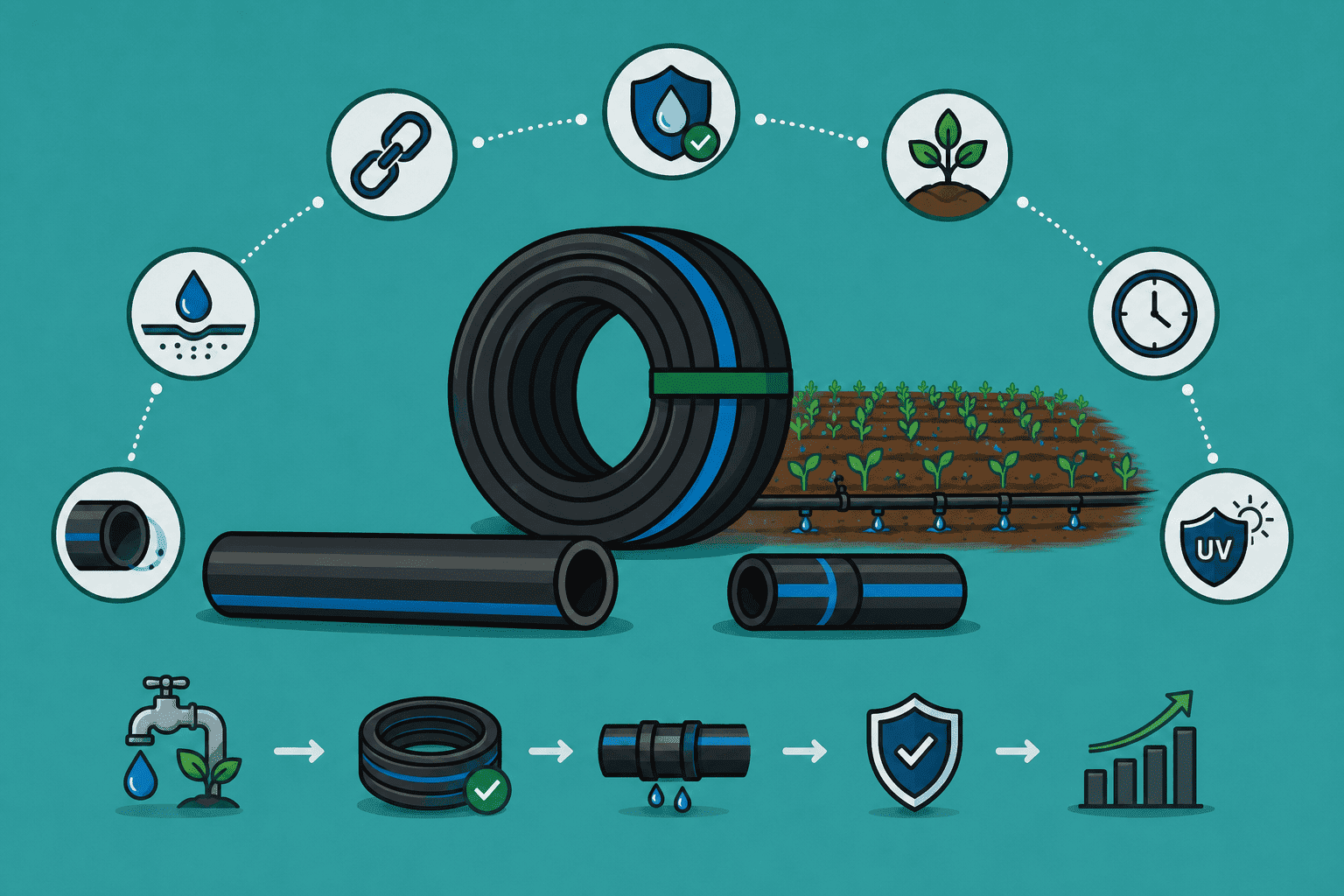
In recent years, HDPE pipes have become one of the most widely used solutions for underground fire protection networks, particularly in infrastructure projects, new urban developments, industrial zones, and commercial complexes.
Their growing popularity is due to several engineering advantages, including:
- Excellent corrosion and rust resistance
- Outstanding resistance to chemicals found in soil
- High flexibility that allows the pipes to accommodate soil movement and settlement
- Lightweight construction compared to metal pipes, simplifying transportation and installation
- A service life that can exceed 50 years when properly designed and installed
- Superior leak resistance through heat fusion welding technologies
These advantages significantly reduce long-term maintenance and repair costs, making HDPE pipes both an economical and technically superior solution.
Steps Of Implementing Fire Networks Using Hdpe Pipes
1. Site Assessment and Preparation of Construction Drawings
Before installation begins, all engineering drawings are reviewed to verify:
- Pipeline routes
- Excavation depths
- Valve chamber locations
- Connection points to the Fire Pump Room
- Building connection points
All materials are also inspected to ensure they comply with the project’s technical specifications and quality standards.
2. Excavation and Trench Preparation
Once the drawings have been approved, excavation begins according to the specified dimensions.
A suitable bedding layer is then prepared to provide proper pipe support and protect the pipeline from concentrated loads or sharp rocks that could damage the pipe.
The trench depth must comply with the project requirements and applicable engineering standards.
3. HDPE Pipe Installation
The HDPE pipes are positioned within the prepared trench while ensuring:
- Proper pipeline alignment
- Prevention of unnecessary stress during installation
- Secure positioning before welding operations
- Verification of pipe diameters and installation direction
Appropriate handling equipment should always be used to avoid damaging the pipes during transportation and installation.
HDPE Pipe Welding Methods for Fire Protection Networks
The reliability of a fire protection network depends heavily on the quality of its welded joints. Therefore, specialized welding techniques are used to create strong, leak-free connections.
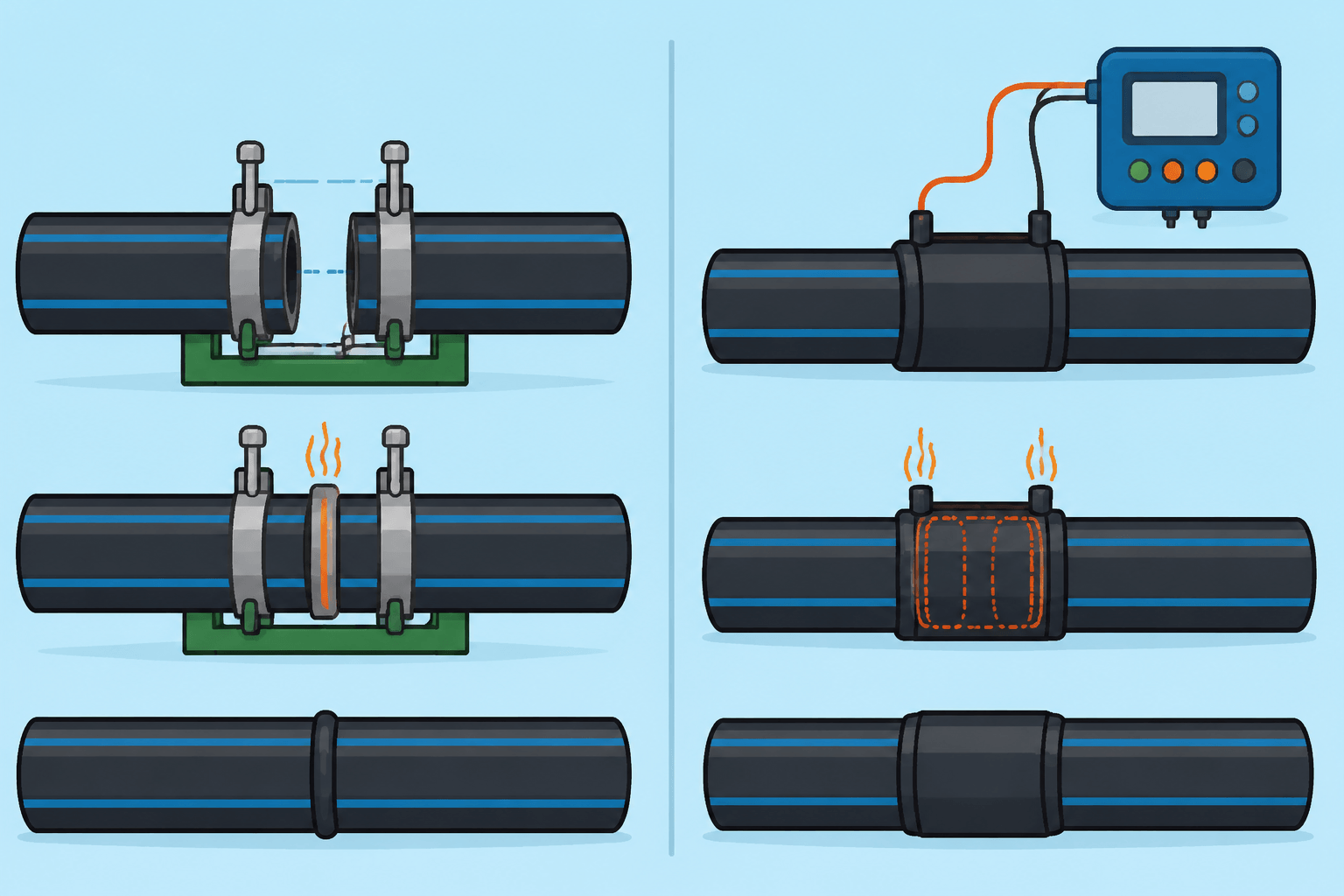
Butt Fusion Welding
Butt Fusion is the most commonly used welding method for newly constructed fire protection networks.
This process joins two pipe ends directly using a Butt Fusion welding machine without requiring additional fittings.
Its advantages include:
- Extremely strong welded joints
- Minimal risk of leakage
- Fast installation for large-scale projects
- Lower long-term installation costs
Electro Fusion Welding
Electro Fusion welding is typically used when Butt Fusion equipment cannot be easily operated, such as:
- Maintenance and repair work
- Confined or restricted spaces
- Connecting new pipelines to existing systems
Fire Protection Network Testing Before Handover
After all installation and welding work has been completed, the project enters the fire protection network testing phase. This is one of the most important stages of the project, as it verifies that the entire system performs according to the approved engineering design.
The testing process aims to:
- Verify the integrity of all pipes and welded joints
- Confirm that the network can withstand the required operating pressure
- Detect any leakage before the system is commissioned
- Ensure compliance with project specifications and applicable engineering codes
A fire protection network should never be approved for handover until it has successfully passed all required tests.
Fire Protection Network Pressure Testing Procedure
Complete Network Inspection
Before pressure testing begins, engineers verify:
- Completion of all installation work
- Proper installation of valves and fittings
- Completion of all welding operations
- Calibration of pressure gauges and testing equipment
Filling the Network with Water
The network is filled gradually while removing all trapped air from the pipelines.
Entrapped air can lead to inaccurate test results and should be completely eliminated before pressure testing begins.
Increasing the Test Pressure
Using a hydrostatic pressure testing pump, pressure is gradually increased until it reaches the specified test pressure according to the project design or applicable engineering standards.
The pressure should always be increased gradually to prevent hydraulic shock that could damage the system.
Maintaining the Test Pressure
Once the required pressure has been reached, it is maintained for the specified testing period while engineers monitor:
- Pressure stability
- Any abnormal pressure loss
- The condition of all welded joints and fittings
Final Inspection
Upon completion of the pressure test, a comprehensive visual inspection is carried out to verify:
- No water leakage
- Pipe integrity
- Joint integrity
- System readiness for commissioning
Common Mistakes in Fire Protection Network Design and Installation
Even when high-quality materials are used, mistakes during design or installation can significantly reduce system performance and increase future maintenance costs.
Some of the most common mistakes include:
- Inaccurate hydraulic calculations
- Selecting an incorrect fire pipe diameter
- Using valves that do not match the required operating pressure
- Poor Fire Pump Room design
- Using pipes or fittings that do not comply with project specifications
- Improper welding procedures
- Using welding machines that have not been properly calibrated
- Skipping pressure testing before project handover
- Backfilling trenches before successful completion of all required tests
- Neglecting routine maintenance after the system is commissioned
Avoiding these mistakes significantly increases the service life and long-term reliability of the fire protection network.
How United Engineers Supports Fire Protection Projects
United Engineers has extensive experience in designing and implementing fire protection networks for a wide range of industrial, commercial, and infrastructure projects.
Our integrated solutions include:
- Construction of Underground Fire Networks using HDPE piping systems.
- Manufacturing and supplying HDPE fittings.
- Providing Butt Fusion and Electro Fusion welding machines.
- Installation of underground fire pipeline systems.
- Training engineers and technicians on HDPE welding techniques.
- Periodic maintenance and calibration of welding equipment.
- Technical consultation for selecting the most suitable pipes, fittings, and welding solutions.
Get Expert Technical Support for Your Fire Protection Network
The success of any fire protection system depends on proper engineering design, accurate hydraulic calculations, selecting the correct pipes and fittings, high-quality welding, and conducting comprehensive fire protection network testing before handover.
Whether you’re planning a new fire protection project or upgrading an existing network, United Engineers provides complete technical support—from system design and pressure calculations to HDPE pipe supply, fittings, welding equipment, installation, and final testing.
Our engineering team is committed to delivering reliable, high-performance fire protection solutions that comply with international engineering standards.
Contact United Engineers today for expert technical consultation and a customized quotation for your fire protection network project.
Request your technical consultation today and get a complete solution for your project.