Types of HDPE Fittings and Their Applications in Infrastructure Projects
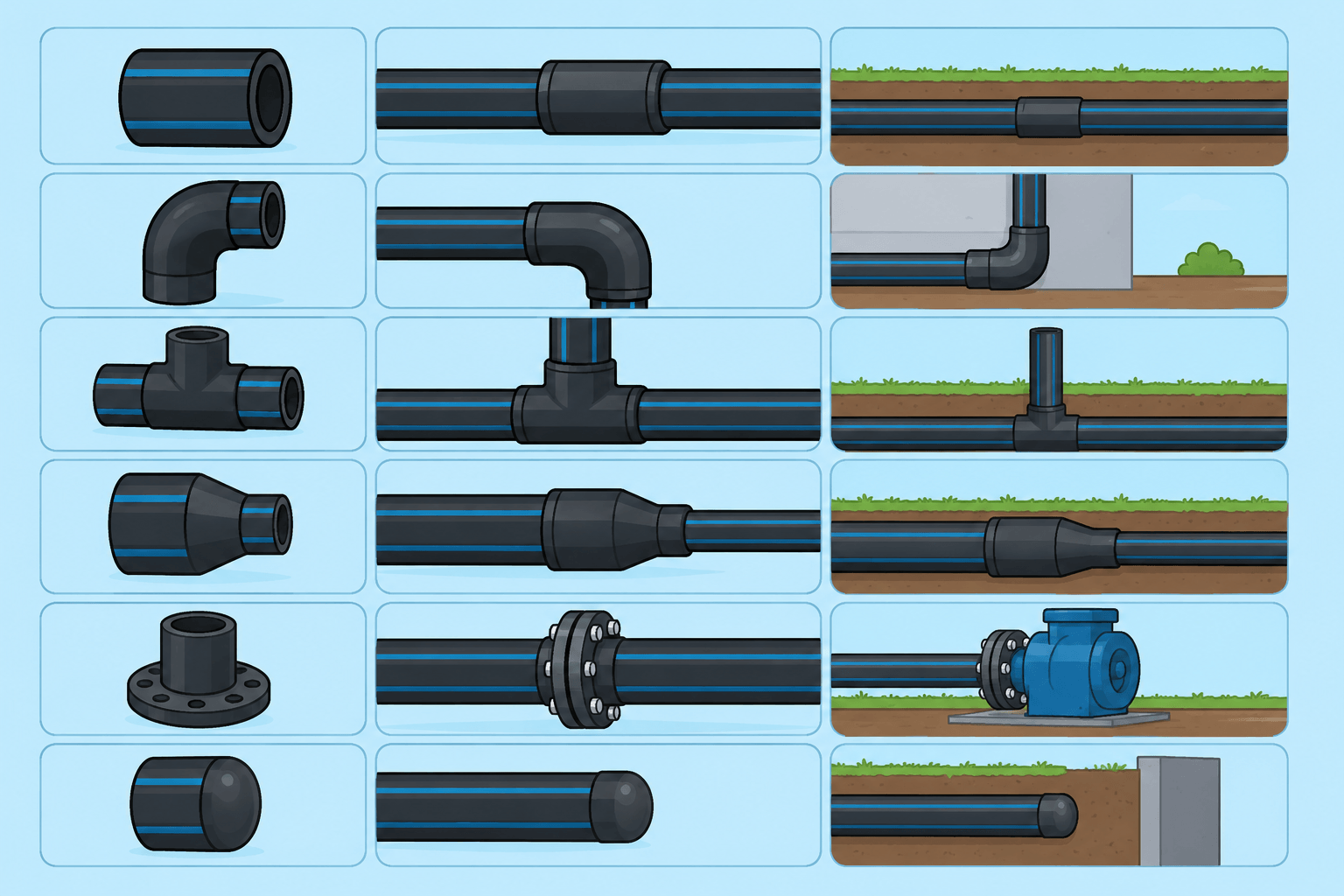
HDPE fittings are among the most essential components of polyethylene piping systems. They are used to connect pipes, change pipeline directions, create branch connections, reduce pipe diameters, and terminate pipeline sections according to the project’s engineering design. The efficiency and reliability of any water, irrigation, sewage, or fire protection network depend greatly on selecting the correct fittings and installing them according to engineering standards.
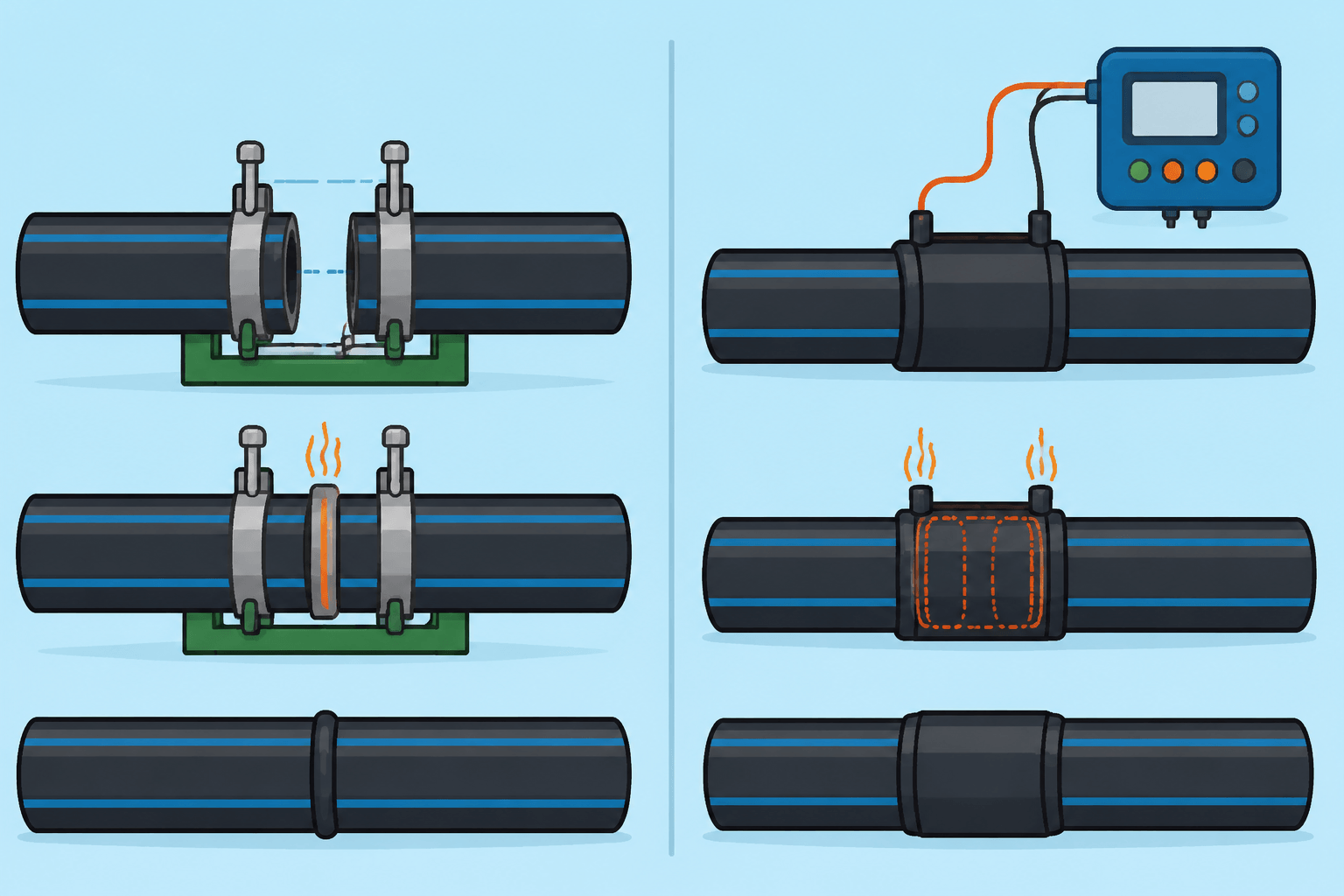
HDPE pipe fittings are available in a wide variety of shapes and sizes to suit different applications. They can be installed using Butt Fusion or Electro Fusion welding techniques, depending on the project requirements.
In this guide, we’ll explore the most common types of HDPE fittings, their applications, and the key factors to consider when selecting the right fitting.
What Are HDPE Fittings?
HDPE fittings are components manufactured from High-Density Polyethylene (HDPE) and are used to connect HDPE pipes, change pipeline direction, create branch lines, reduce pipe diameters, or terminate pipelines.
When properly welded, HDPE fittings provide joints that are nearly as strong as the pipes themselves, resulting in durable, leak-free piping systems.
HDPE fittings are widely used in:
- Drinking water networks
- Modern irrigation systems
- Sewage networks
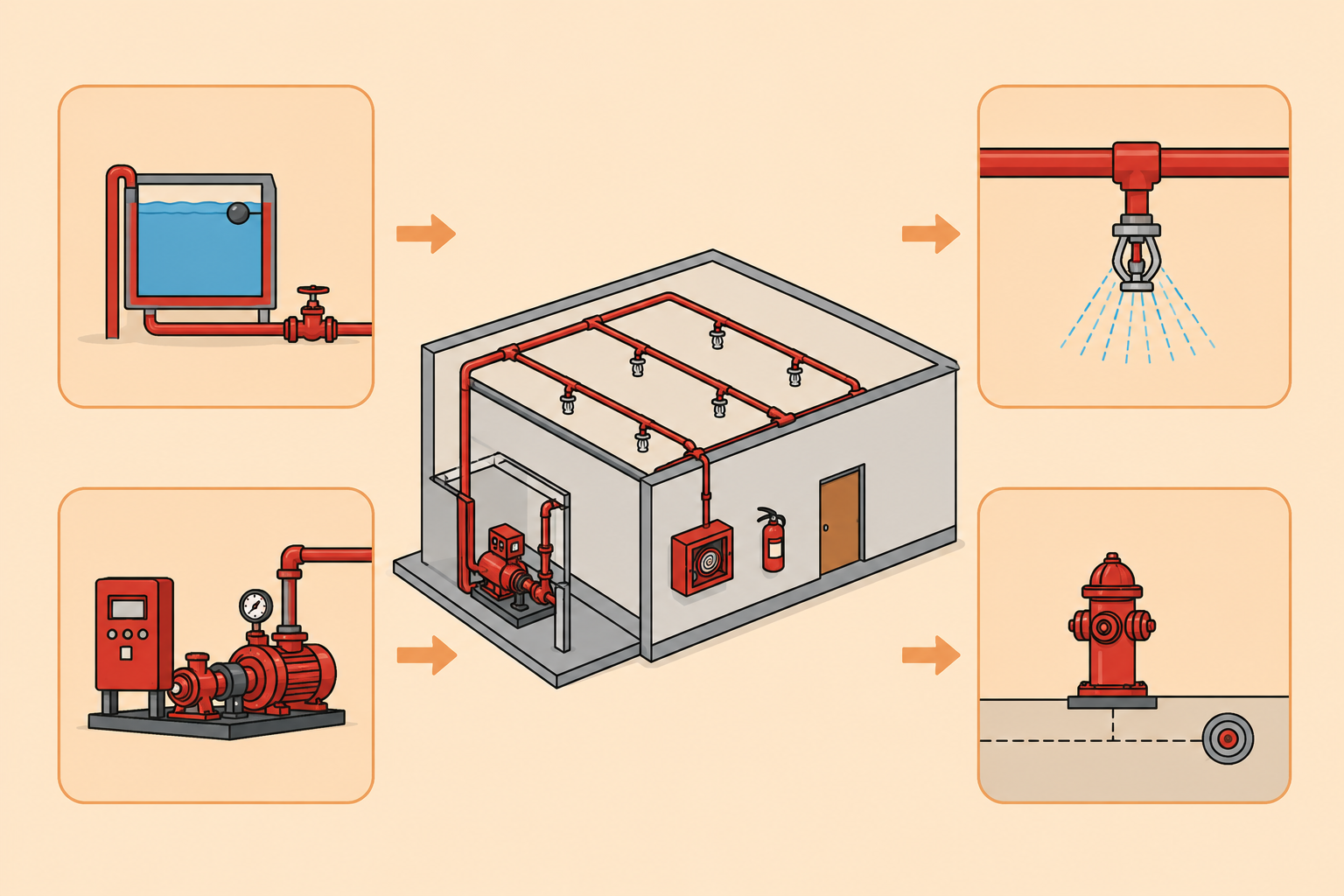
- Fire protection systems
- Industrial fluid transportation
- Infrastructure projects
Types of HDPE Fittings
1. HDPE Elbow
An HDPE Elbow is used to change the direction of a pipeline while maintaining efficient water flow.
The most common angles include:
- 45° Elbow
- 90° Elbow
These fittings are commonly used in:
- Water supply networks
- Irrigation systems
- Fire protection systems
- Sewage pipelines
Selecting the appropriate elbow angle helps reduce pressure loss and improves overall system performance.
2. HDPE Tee
An HDPE Tee is used to create branch connections from a main pipeline.
There are two primary types:
Equal Tee
Used when all three pipeline connections have the same diameter.
Reducing Tee
Used when the branch line has a smaller diameter than the main pipeline.
HDPE tees are among the most frequently used fittings in water distribution and irrigation systems.
3. HDPE Reducer
An HDPE Reducer is designed to connect pipes of different diameters.
Its main functions include:
- Maintaining smooth water flow.
- Reducing pressure loss.
- Safely connecting pipelines of different sizes.
Reducers are commonly used whenever pipeline diameters need to transition within a network.
4. HDPE End Cap
An HDPE End Cap is used to close the end of a pipeline.
Typical applications include:
- Hydrostatic pressure testing
- Temporary or permanent pipeline termination
- Future system expansions
- Maintenance operations
5. Electrofusion Fittings
Electrofusion fittings contain built-in electrical heating coils that are activated using an Electrofusion Welding Machine to create strong, leak-proof joints.
The most common electrofusion fittings include:
- Electrofusion Elbow
- Electrofusion Equal Tee
- Electrofusion Reducing Tee
- Electrofusion Reducer
- Electrofusion End Cap
- Electrofusion Coupler
These fittings are typically used for:
- Maintenance and repair projects
- Confined installation areas
- Water and gas distribution systems
- Locations where Butt Fusion equipment cannot be easily used
6. Butt Fusion Fittings
Butt Fusion fittings are joined using a Butt Fusion Welding Machine.
The most common types include:
- Butt Fusion Elbow
- Butt Fusion Equal Tee
- Butt Fusion Reducing Tee
- Butt Fusion Reducer
These fittings are widely used in new infrastructure projects involving medium and large diameter HDPE pipelines.
How to Choose the Right HDPE Fitting
Selecting the appropriate fitting depends on several engineering factors.
Project Type
The fitting should be selected according to the intended application, such as:
- Drinking water networks
- Irrigation systems
- Sewage networks
- Fire protection systems
- Industrial applications
Pipe Diameter
The fitting must match the pipe diameter to ensure proper welding and long-term system reliability.
Operating Pressure
HDPE fittings should be selected with pressure ratings that match the operating pressure of the pipeline to ensure safe and reliable performance.
Welding Method
The choice of fitting also depends on the installation method, whether using:
- Butt Fusion
- Electro Fusion
The appropriate welding method should be selected based on project specifications and site conditions.
Why Are HDPE Fittings the Preferred Choice?
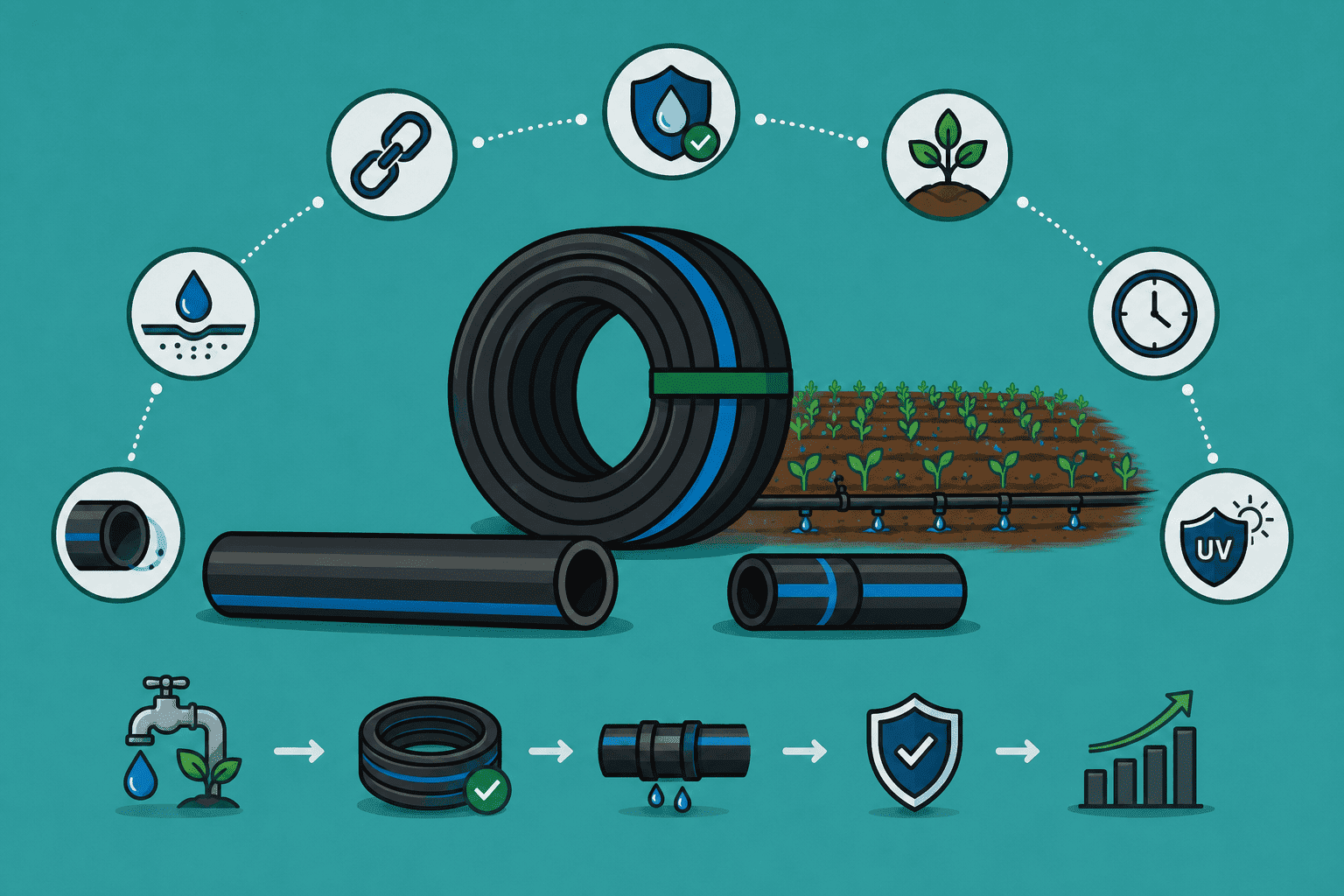
HDPE fittings offer numerous advantages over conventional pipe connection methods, including:
- Excellent corrosion and chemical resistance.
- Long service life.
- Superior leak resistance.
- High pressure performance.
- Easy installation using modern welding technologies.
- Reduced long-term maintenance costs.
These advantages have made HDPE fittings the preferred solution for modern infrastructure projects.
Common Mistakes When Selecting HDPE Fittings
Improper fitting selection can negatively affect pipeline performance.
Common mistakes include:
- Using fittings that do not match the pipe diameter.
- Selecting fittings with insufficient pressure ratings.
- Performing welding with poorly calibrated equipment.
- Using low-quality fittings that do not comply with international standards.
To ensure reliable performance, it is always recommended to use certified HDPE fittings and have installation carried out by qualified technicians.
How United Engineers Supports Your HDPE Projects
United Engineers provides a comprehensive range of HDPE fittings and welding equipment for infrastructure projects, delivering reliable solutions that meet international quality standards.
Our services include:
- Manufacturing and supplying HDPE fittings in various sizes.
- Providing Butt Fusion and Electrofusion fittings.
- Rental and sale of HDPE pipe welding machines.
- Training engineers and technicians on HDPE welding techniques.
- Periodic maintenance and calibration of welding equipment.
- Technical consultation to help clients select the most suitable products for their projects.
Get Expert Advice on Choosing the Right HDPE Fittings
Selecting the right HDPE fittings is just as important as choosing the pipes themselves. Proper fittings directly affect the efficiency, durability, and long-term reliability of any pipeline network.
If you’re looking for HDPE fittings that comply with international standards or need engineering support in selecting the right products, the United Engineers team is ready to assist you.
We provide complete HDPE solutions, including fittings, welding equipment, technical consultation, and project support to ensure your pipeline network is built to the highest standards of quality and performance.
Contact United Engineers today for expert technical consultation and a customized quotation for your next infrastructure project.
Request your technical consultation today and get a complete solution for your project.