HDPE vs. UPVC vs. PVC Pipes: Which Is Best for Your Project?
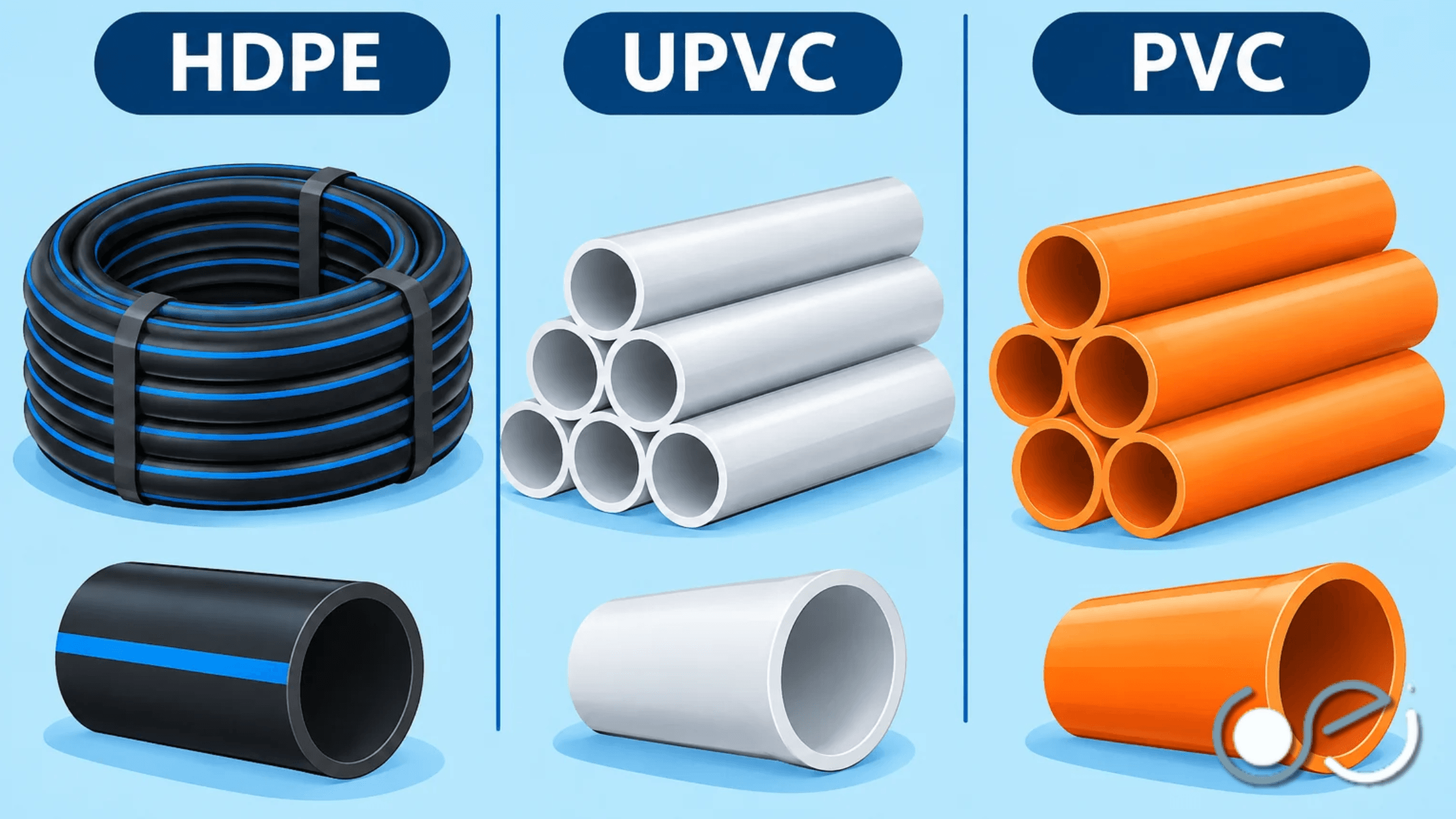
Choosing the right type of pipe is an important step when carrying out water supply, irrigation, and sewage projects. Some of the most commonly used types are HDPE, UPVC, and PVC pipes.
Each type has different characteristics in terms of flexibility, material properties, connection methods, and applications. HDPE pipes, in particular, offer several advantages, including flexibility, corrosion resistance, and heat fusion welding, making them a suitable choice for many infrastructure projects.
In this article, we explain the differences between HDPE, UPVC, and PVC pipes, their main advantages, their common applications, and how to choose the right type for your project.
What Are HDPE, UPVC, and PVC Pipes?
1. HDPE Pipes
HDPE pipes are made from High-Density Polyethylene. They are widely used in drinking water, irrigation, sewage, and certain fire protection network applications.
Their main advantages include:
- Flexibility, allowing them to adapt to different pipeline routes.
- Resistance to rust and corrosion.
- Good impact resistance.
- The ability to be joined using heat fusion welding.
- Suitability for many underground pipeline applications.
2. UPVC Pipes
UPVC stands for Unplasticized Polyvinyl Chloride. These pipes are made from PVC without the addition of plasticizers, which makes them rigid and helps them maintain their shape.
Their main advantages include:
- High rigidity and dimensional stability.
- Resistance to rust and corrosion.
- Relatively easy transportation and installation.
- Use in water supply, sewage, and certain pressure applications.
3. PVC Pipes
PVC stands for Polyvinyl Chloride, a plastic material used to manufacture different types of pipes.
Depending on the product type, PVC pipes offer advantages such as lightweight construction, easy installation, and corrosion resistance. They are used in drainage, sewage, and some water supply applications according to their specifications.
It is important to understand that UPVC is a type of PVC. However, unlike some other PVC formulations, it does not contain plasticizers that make the material more flexible.
Comparison Between HDPE, UPVC, and PVC Pipes
The following table highlights the main differences between these three pipe types.
| Comparison | HDPE | UPVC | PVC |
| Material | High-Density Polyethylene | Unplasticized Polyvinyl Chloride | Polyvinyl Chloride |
| Flexibility | Relatively flexible | Rigid | Depends on the type |
| Corrosion resistance | High | High | Good |
| Impact resistance | Very good | Depends on the product | Depends on the product |
| Connection method | Heat fusion or suitable mechanical fittings | Rubber ring joints or solvent cement, depending on the system | Depends on the pipe type |
| Common applications | Water, irrigation, sewage, and some fire networks | Water, sewage, and certain pressure applications | Drainage, sewage, and some water applications |
What Are the Advantages of HDPE Pipes Compared to UPVC and PVC?
HDPE pipes offer several characteristics that make them suitable for many infrastructure projects.
1. Flexibility and Easier Installation
HDPE pipes are more flexible than rigid pipe materials such as UPVC.
This flexibility helps when installing pipelines along different routes and around certain bends, reducing the need for additional fittings in some applications.
It also allows HDPE pipes to accommodate certain types of ground movement, provided that the installation follows the required technical specifications.
2. Corrosion and Rust Resistance
HDPE pipes do not rust and offer good resistance to many chemicals. This makes them suitable for water networks, certain sewage applications, and other fluid transportation systems.
3. Strong Joints and Reduced Leakage Risk
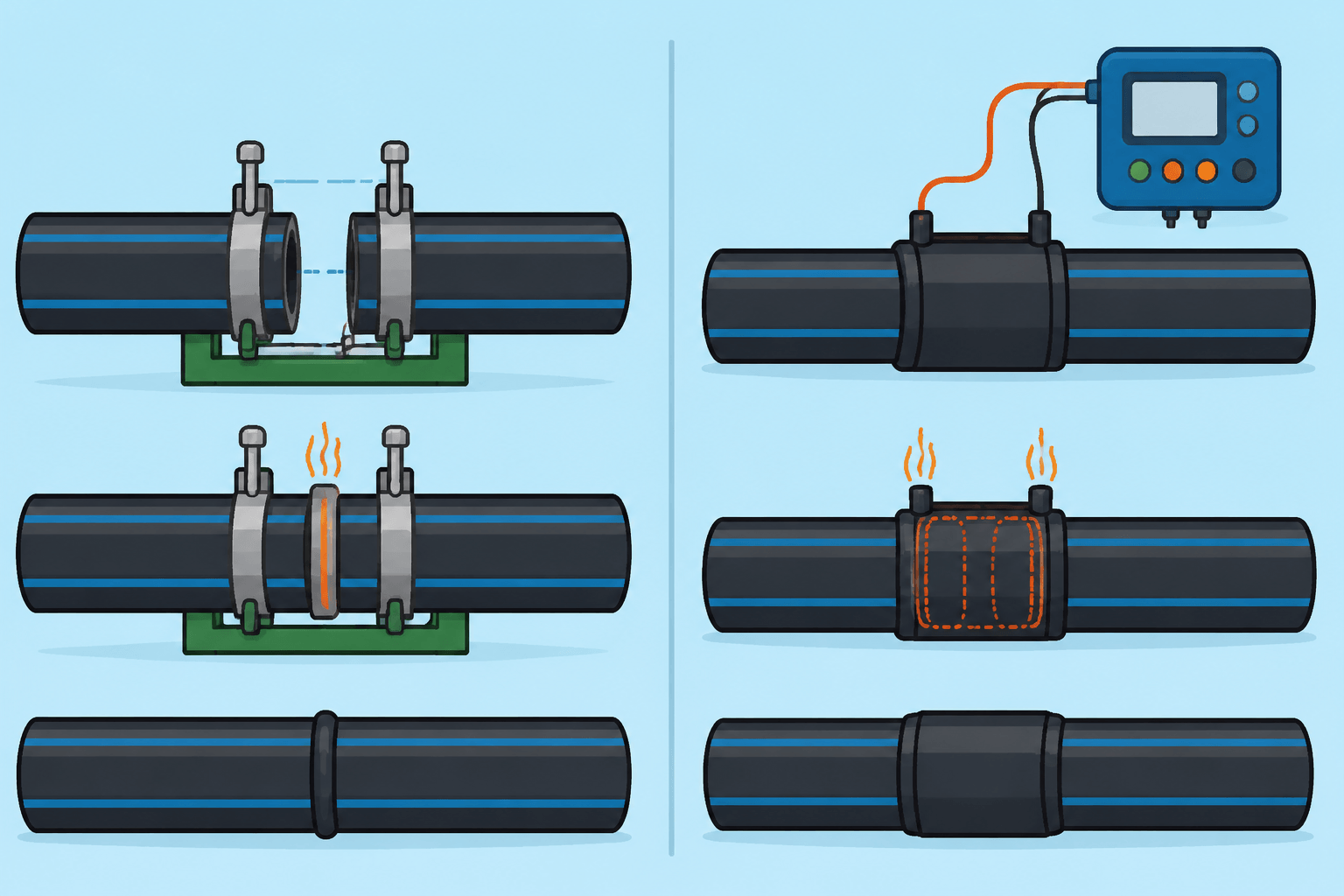
HDPE pipes can be connected using heat fusion welding. The most common methods include:
- Butt Fusion: The ends of two pipes or fittings are heated and pressed together to create a strong joint.
- Electrofusion: Special fittings containing electrical heating elements are used to join the pipe and fitting.
These methods help create secure joints when the correct equipment and procedures are used by trained technicians.
Learn more in our article about the Difference Between Butt Fusion and Electrofusion in HDPE Pipe Welding.
4. Impact Resistance
HDPE pipes offer good impact resistance, making them suitable for many infrastructure applications where pipes may be exposed to different installation and operating conditions.
5. Suitable for Infrastructure Networks
HDPE pipes are used in a wide range of projects, including drinking water, irrigation, sewage, and certain fire protection networks, depending on the project requirements and applicable specifications.
To learn more about their properties, read our article about the Advantages and Disadvantages of High-Density Polyethylene (HDPE) Pipes.
Applications of HDPE, UPVC, and PVC Pipes
The choice of pipe material depends on the network type, operating pressure, and project conditions.
1. Drinking Water Networks
HDPE and UPVC pipes are both used in drinking water networks, provided that the pipes meet the required standards for potable water applications.
HDPE pipes offer flexibility and heat fusion connections, making them suitable for many underground water transmission and distribution lines.
Learn more about our services on the Drinking Water Networks page.
2. Irrigation Networks
HDPE pipes are widely used in irrigation networks because of their flexibility, corrosion resistance, and suitability for different pipeline layouts.
Learn more about Irrigation Water Networks and the solutions used in their implementation.
3. Sewage Networks
HDPE and UPVC pipes can both be used in sewage applications. The right choice depends on the network design, whether it operates by gravity or under pressure, and the project’s technical requirements.
Find out more on our Sewage Networks page.
4. Fire Protection Networks
HDPE pipes are used in certain fire protection applications, particularly underground pipelines, when they comply with the project’s specifications and applicable approval requirements.
Which Is Better: HDPE, UPVC, or PVC Pipes?
There is no single pipe type that is best for every project. The right choice depends on the application, required pressure, installation conditions, and overall project cost.
The differences can be summarized as follows:
- HDPE: A suitable option for projects that require flexibility, heat fusion welding, and corrosion resistance.
- UPVC: Suitable for certain water and sewage networks that require rigid pipes with stable dimensions.
- PVC: Used in various applications, particularly drainage and wastewater systems, depending on the product type and specifications.
HDPE pipes combine flexibility, impact resistance, and the ability to create strong fusion joints. These properties make them an important option for many infrastructure projects.
How to Choose the Right Pipe for Your Project
Before purchasing pipes or starting installation, consider the following factors:
- Network type: Is the project for drinking water, irrigation, sewage, or fire protection?
- Operating pressure: The pipe must be selected according to the required operating pressure and design conditions.
- Pipe diameter: The correct diameter should be determined based on the required water flow rate.
- Site conditions: Consider soil conditions, burial depth, and installation methods.
- Technical specifications: Make sure the pipes and fittings meet the standards required for the project.
How United Engineers Supports HDPE Projects
United Engineers provides a range of infrastructure and polyethylene piping solutions, including services related to water, irrigation, sewage, and fire protection networks.
The company’s services include:
- Installation of drinking water, irrigation, sewage, and fire protection networks.
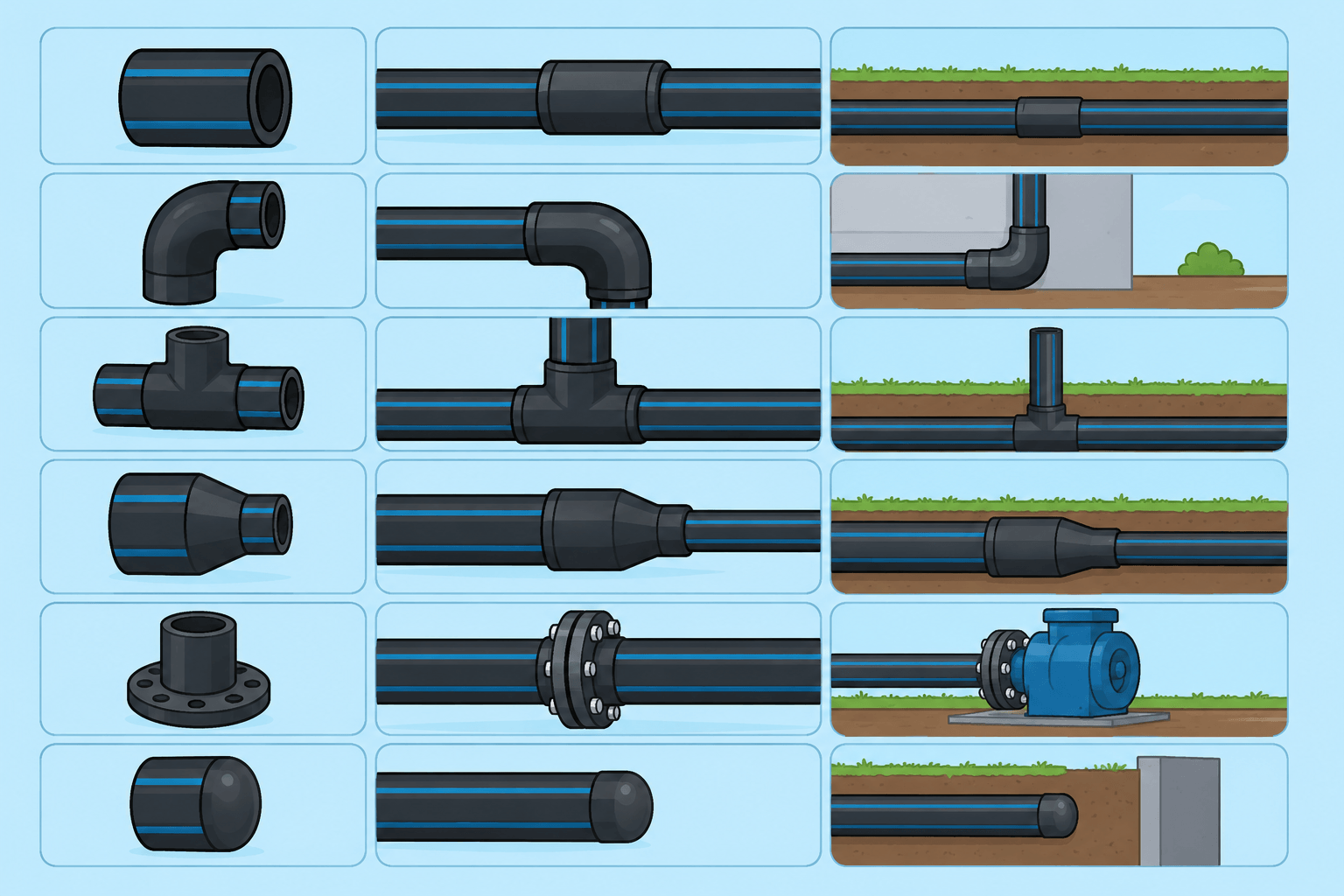
- Manufacturing HDPE fittings and components.
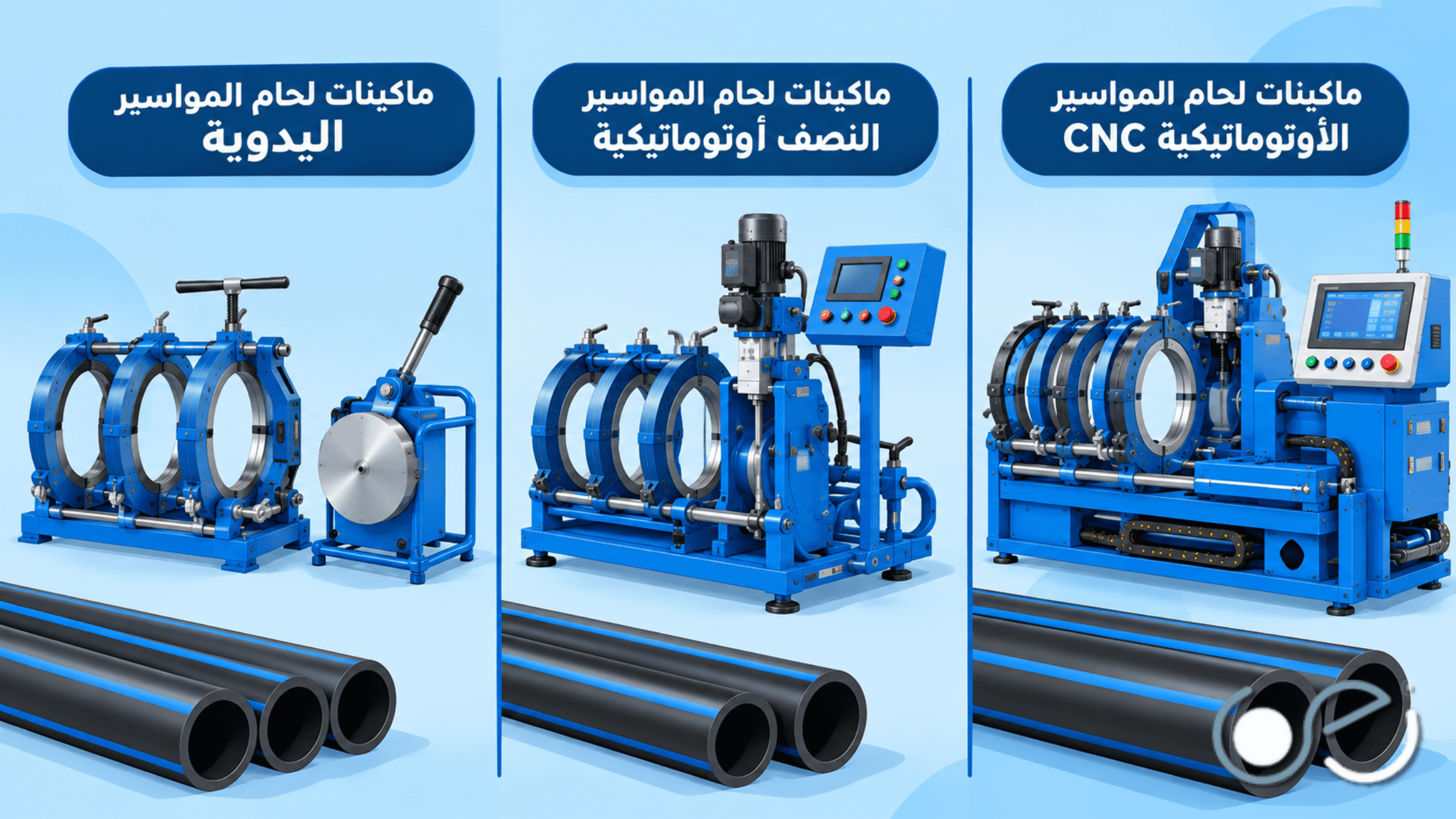
- Sale and rental of polyethylene welding machines.
- Training engineers and technicians to operate welding machines.
- Periodic and emergency welding machine maintenance and calibration.
The company also provides specialized solutions for HDPE Fittings Manufacturing, as well as Polyethylene Welding Machine Sales and Rental.
Contact United Engineers to discuss your project requirements and find suitable HDPE solutions for your infrastructure needs.
Frequently Asked Questions About HDPE, UPVC, and PVC Pipes
What Is the Difference Between HDPE and UPVC Pipes?
HDPE pipes are made from High-Density Polyethylene and are known for their flexibility and heat fusion welding capabilities. UPVC pipes are made from unplasticized polyvinyl chloride and are characterized by their rigidity and dimensional stability.
Are HDPE Pipes Better Than PVC Pipes?
HDPE pipes offer flexibility, impact resistance, and heat fusion connections. However, some PVC products may be more suitable for specific applications in terms of cost and installation methods. The right choice depends on the project requirements.
Are UPVC and PVC Pipes the Same?
UPVC is a type of PVC. However, it does not contain plasticizers, which are added to some PVC formulations to make the material more flexible.
Can HDPE Pipes Be Used for Drinking Water?
Yes. HDPE pipes can be used in drinking water networks, provided that the pipes and fittings comply with the applicable standards for potable water applications.
What Are the Best Pipes for Irrigation Networks?
HDPE pipes are widely used in irrigation networks because of their flexibility, corrosion resistance, and suitability for heat fusion welding. However, the pipe grade, diameter, and pressure rating must be selected according to the network design.
Can HDPE Pipes Be Connected to UPVC Pipes?
Yes. HDPE and UPVC pipes can be connected using suitable transition fittings. However, the connection must account for differences in material, diameter, dimensions, and pressure ratings. The two materials cannot be joined using conventional heat fusion welding.
Contact United Engineers
Contact United Engineers today for expert technical consultation and a customized quotation for your fire protection network project.
Request your technical consultation today and get a complete solution for your project.