Types of Irrigation Network Pipes and Advantages of HDPE Pipes for Projects
Modern irrigation networks are among the most important elements in developing the agricultural sector and green projects. The efficiency of water distribution depends mainly on selecting the right network components, with choosing the proper irrigation network pipes being one of the most important factors affecting system performance and service life.
With the development of irrigation network installation technologies, HDPE pipes (High-Density Polyethylene pipes) have become one of the most widely used solutions due to their flexibility, high durability, and ease of installation compared to many traditional pipe types.
Understanding the available pipe types and selecting the suitable option for each project helps reduce water loss, improve operating efficiency, and minimize future maintenance costs.
What Are Irrigation Network Pipes?
Irrigation network pipes are water transportation lines that connect the water source to different irrigation areas, including:
- Agricultural farms
- Gardens and landscapes
- Land reclamation projects
- Drip irrigation networks
- Sprinkler irrigation networks
The network is designed to achieve:
- Uniform water distribution
- Suitable pressure at all points
- Minimum possible water loss
Therefore, selecting the right pipe type does not depend only on cost, but also on engineering factors such as pressure, diameter, and soil conditions.
Types of Irrigation Network Pipes Used in Projects
There are several types of pipes used in irrigation systems, and the selection depends on the nature of the project.
1. HDPE Pipes for Irrigation Networks
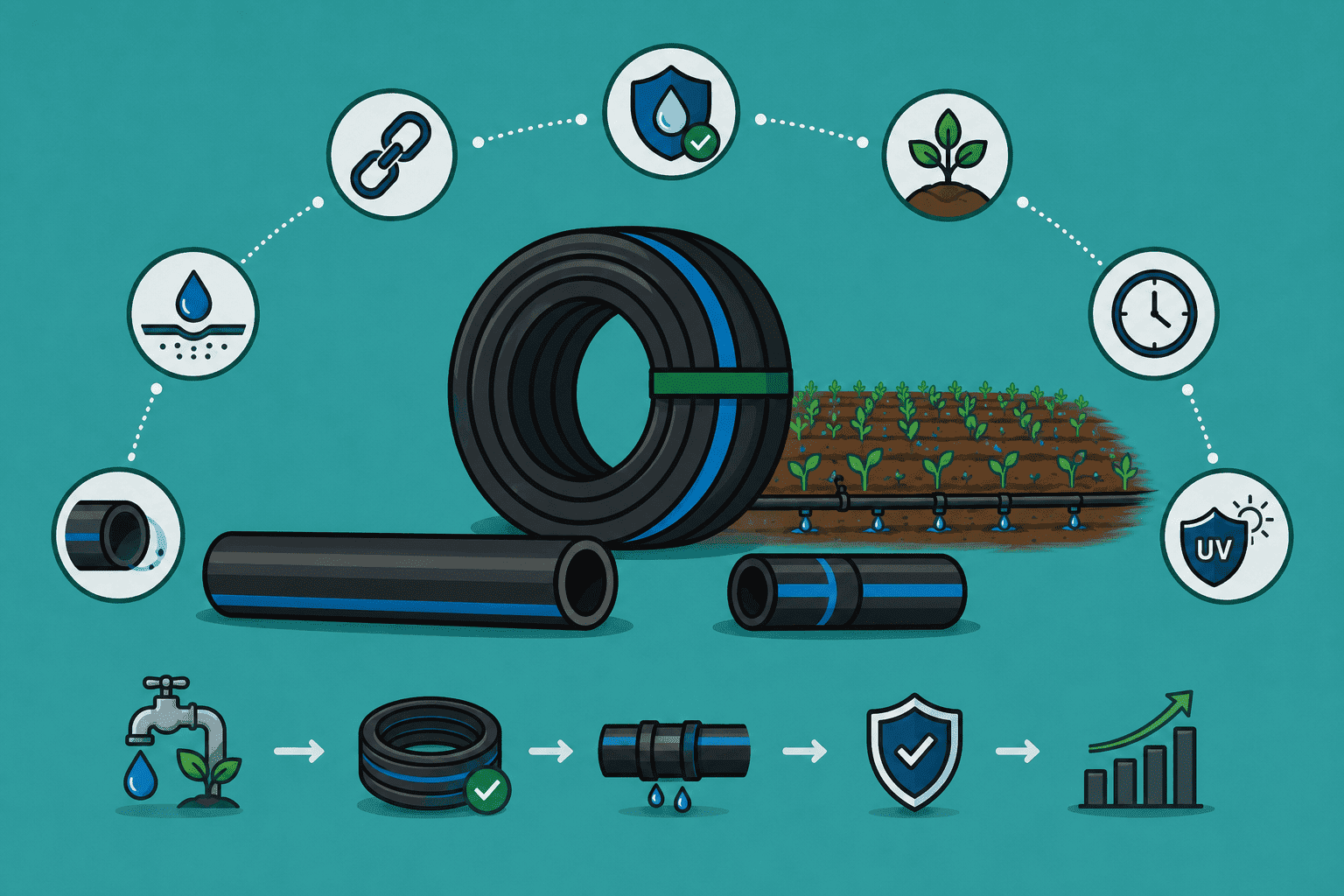
HDPE irrigation pipes are among the most commonly used solutions in modern projects due to their advanced engineering properties.
They provide:
- High pressure resistance
- Flexibility that allows them to withstand soil movement
- Resistance to corrosion and rust
- Resistance to chemicals found in water or soil
- Long service life
- Easy connection using thermal welding
Using polyethylene pipes also reduces the possibility of leakage compared to some traditional systems.
2. PVC Pipes in Irrigation Networks
PVC pipes are used in some irrigation systems, especially projects that require economical solutions.
Their advantages include:
- Lightweight
- Easy transportation
- Lower initial cost
However, they can be less flexible than HDPE pipes, making HDPE a better choice for many projects that require higher durability.
3. Drip Irrigation Hoses and Networks
These are usually used in final distribution lines to deliver water to plants.
They require:
- Proper pressure
- Accurate network design
- Suitable materials to ensure uniform water distribution
Why Are HDPE Pipes the Best Choice for Irrigation Networks?
HDPE irrigation pipes provide several advantages that make them suitable for agricultural and engineering projects.
Leak Resistance
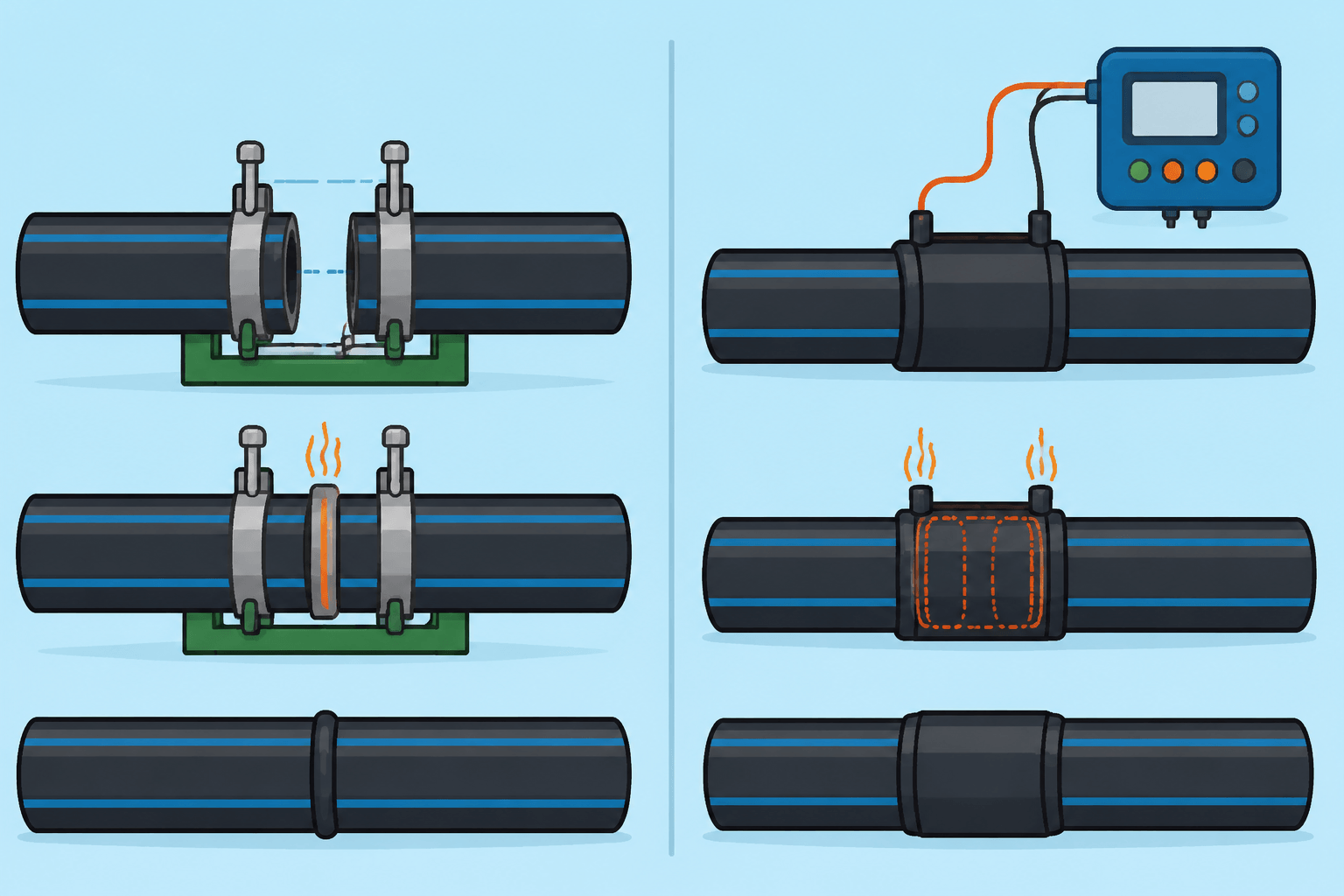
HDPE pipes are connected using welding techniques such as:
- Butt Fusion
- Electro Fusion
This creates strong joints that reduce the possibility of leakage.
Ability to Withstand Different Operating Conditions
HDPE pipes can withstand:
- Temperature variations
- Water pressure
- Different soil conditions
making them suitable for long-term applications.
Easy Installation
Due to their lightweight and flexibility, HDPE pipes can be installed faster compared to some other pipe types, reducing project execution time.
How to Choose the Right Irrigation Network Pipes?
When selecting irrigation network pipes, several factors must be considered:
1. Pipe Diameter
The required diameter is determined based on:
- Required water quantity
- Network length
- Number of irrigation points
- Flow rate
Choosing an unsuitable diameter may result in:
- Low water pressure
- Uneven irrigation
- Increased energy consumption
2. Operating Pressure
Pipes must be selected according to the expected network pressure.
HDPE pipes are available in different pressure ratings such as:
- PN6
- PN10
- PN16
The suitable type is selected according to the project design.
3. Soil Conditions and Installation Location
In some locations, networks may be exposed to:
- Soil movement
- External loads
- Temperature changes
This highlights the importance of using flexible pipes such as HDPE.
Common Mistakes in Irrigation Network Installation
Choosing Pipes Based Only on Price
This may lead to future problems such as:
- Weak network performance
- Increased failures
- Higher maintenance costs
Ignoring Water Pressure Requirements
Selecting pipes that cannot withstand operating pressure may cause network damage or water leakage.
Poor Joint Quality
Even with high-quality pipes, poor welding or unsuitable equipment can negatively affect network performance.
How United Engineers Helps in Implementing HDPE Irrigation Networks
Choosing the right pipes requires technical expertise to ensure that all network components work together efficiently.
United Engineers provides integrated solutions for irrigation network projects, starting from selecting the suitable HDPE pipes to supplying the required implementation equipment.
Our services include:
- Supplying polyethylene pipes
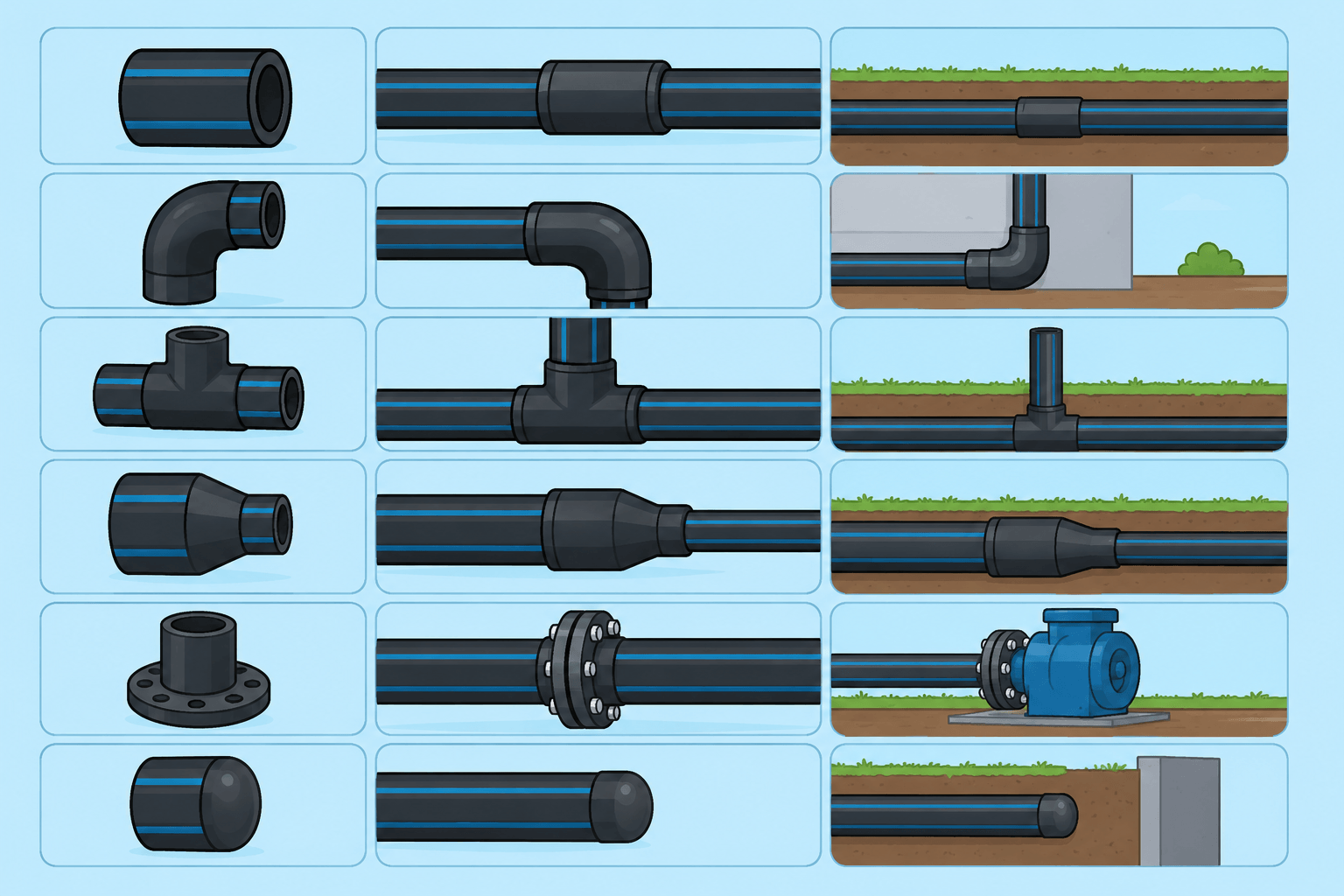
- Providing HDPE fittings and connections
- Preparing suitable welding equipment
- Providing technical support for projects
Get a Technical Consultation for Your Irrigation Network Project
Choosing the right irrigation network pipes is a long-term investment that directly affects project efficiency and reduces operating costs.
If you are planning to install a new irrigation network or upgrade an existing system, contact United Engineers to receive technical support and select the best solution according to your project requirements.
We help you with:
- Determining pipe specifications
- Selecting suitable diameters
- Providing the required equipment
- Implementing reliable and efficient networks
Request your technical consultation today and get a complete solution for your project.