Types of Fire Pipes
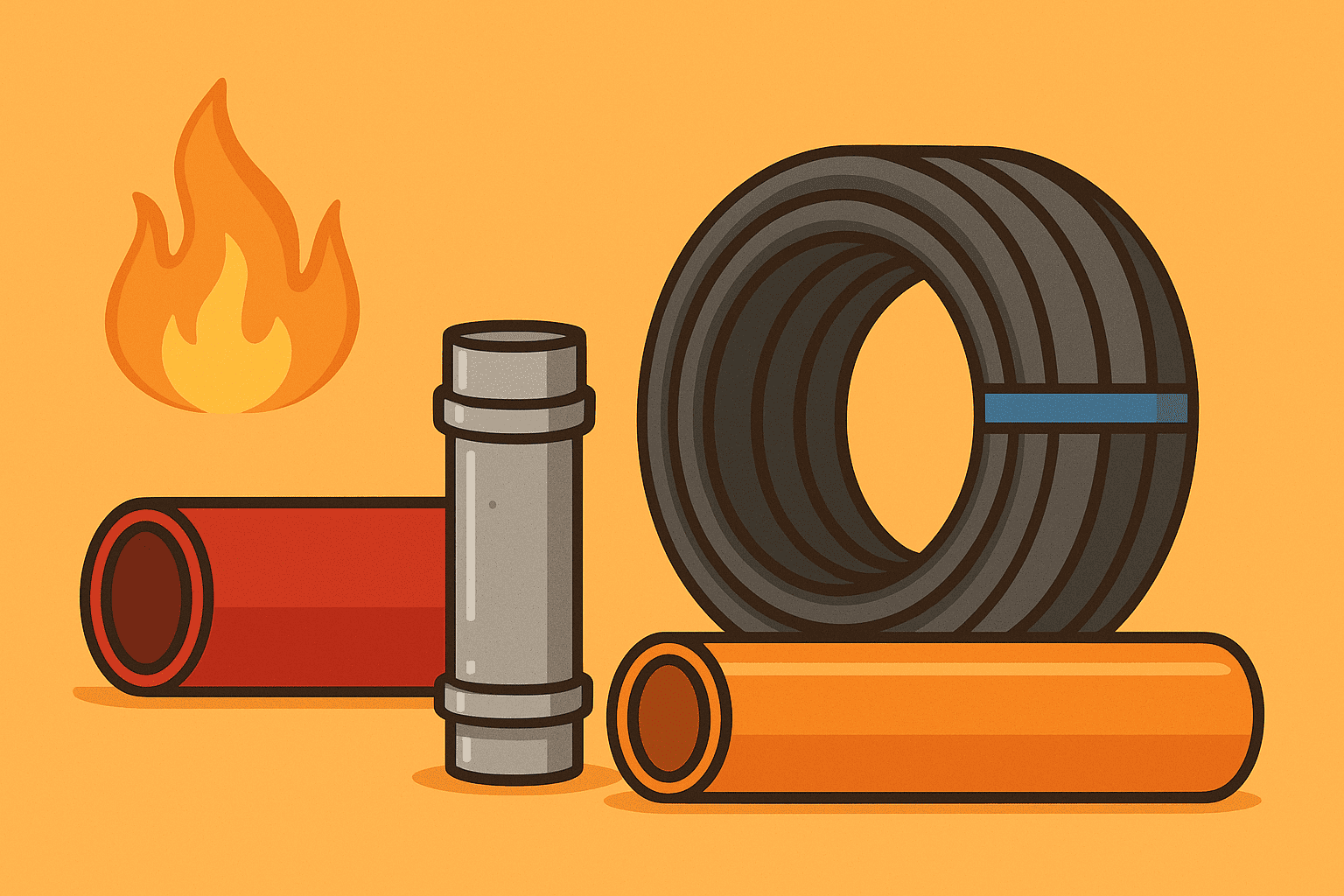
Fire networks are among the most critical safety elements in buildings and industrial or commercial facilities. Their effectiveness depends on choosing the right types of fire pipes and installing them according to modern and approved fire network design principles.
We cover the main types of fire pipes, key fire pipe specifications, sizes and diameter tables, the benefits of using HDPE in fire networks, and the role of United Engineers in installation and maintenance.
1. Steel Pipes
Steel pipes are the most commonly used type in fire networks.
Advantages:
- High pressure resistance.
- Fire and corrosion resistance when coated properly.
- Available in different sizes to suit all network types.
2. Galvanized Steel Pipes
- Superior rust resistance compared to regular steel.
- Long lifespan when regularly maintained.
3. Carbon Steel Pipes
- Suitable for high-pressure applications, often used in major water lines.
4. Plastic Pipes (CPVC / UPVC Fire Pipes)
- Good heat resistance.
- Lightweight and easy to install.
- Available in various sizes for easy integration with sprinkler systems.
Fire Pipe Specifications
When selecting fire pipes, it’s important to consider the following:
- Ability to withstand required pressure.
- Pipe material (steel, galvanized, CPVC).
- Corrosion and heat resistance.
- Compatibility with the network system being installed.
Benefits of Using HDPE in Fire Networks
HDPE pipes are among the most efficient and modern solutions for fire systems:
- High resistance to corrosion and wear over long periods.
- Excellent flexibility for distributing water in sprinkler systems.
- High-pressure tolerance to ensure continuous performance during fire emergencies.
- Thermal welding prevents leaks 100%.
- Long service life, reducing future maintenance costs.
Fire Network Design Principles
Key fire network design principles include:
- Determining the type and usage of the building.
- Calculating the required pressure for sprinklers and fire hydrants.
- Selecting the right pipe type and size.
- Distributing water to cover all points in the network.
- Complying with local and international safety standards.
Role of Fire Network Installation Companies
Professional installation companies ensure the network operates efficiently:
- Selecting the correct pipes based on fire network design principles.
- Installing the network and verifying connections and valves.
- Testing the network to confirm pressure and flow.
- Providing regular maintenance to ensure continuous operation.
Why Choose United Engineers?
- Extensive experience in designing and installing fire and hydraulic networks.
- Commitment to international and local quality standards.
- Specialized engineering team overseeing the project from design to operation.
- Complete solutions including supply – installation – testing – maintenance.
- Continuous technical support and after-service.
Contact Us
If you are looking for one of the best fire network installation companies specialized in designing and implementing fire systems using High-Density Polyethylene (HDPE) pipes, United Engineers offers the most effective solutions with the highest quality and on-time delivery.
📞 Contact us now for a free consultation and learn how we can support your projects with the best technical solutions. Our team is ready to answer all your inquiries!